
Six Days Before Muscat: What India's U19 Squad List Leaves Out
**मुख्य उत्तर**: भारत ने ACC पुरुष U19 एशिया कप (5–14 नवंबर, मस्कट) के लिए लक्ष्य राइचंदानी की कप्तानी में 15 सदस्यीय टीम घोषित की। यशबर्धन सिंह चौहान उपकप्तान हैं; अन्वय द्रविड़ और रजत बागेल दो विकेटकीपर हैं। टीम ग्रुप A में पाकिस्तान, UAE और नेपाल के साथ है। **मुख्य तथ्य**: - 15 सदस्यीय दस्ता; चयन जूनियर क्रिकेट समिति द्वारा; कप्तान और उपकप्तान दोनों औपचारिक रूप से नामित। - ग्रुप A: भारत, पाकिस्तान, UAE, नेपाल; ग्रुप B: बांग्लादेश, श्रीलंका, अफ़ग़ानिस्तान, मलेशिया। - हर ग्रुप से दो टीमें सेमीफ़ाइनल (12 नवंबर) में; फ़ाइनल 14 नवंबर; भारत के लिए अधिकतम पाँच मैच। - सलाह में फ़ॉर्मेट, मैदान, मैच शुरू होने का समय, सहयोगी स्टाफ़ और स्टैंड-बाय सूची का उल्लेख नहीं। - भारत के पास पाँच ICC U19 विश्व कप खिताब; ACC U19 खिताबों की गिनती सत्यापन योग्य नहीं। **स्रोत**: BCCI मीडिया सलाह, 30 अक्टूबर | Cross-checked: cricsultan.com **संबंधित प्रश्न-उत्तर**: प्रश्न: क्या टूर्नामेंट 50 ओवर का है? उत्तर: सलाह में फ़ॉर्मेट नहीं लिखा; ACC U19 एशिया कप परंपरागत रूप से 50 ओवर का रहा है, पुष्टि ACC प्लेइंग कंडीशंस से होनी है। प्रश्न: भारत का पहला मैच कब है? उत्तर: सलाह में मैच-वार कार्यक्रम नहीं दिया गया, केवल 5–14 नवंबर की खिड़की बताई गई है। प्रश्न: भारत के ग्रुप में कौन-कौन है? उत्तर: पाकिस्तान, UAE और नेपाल — cricsultan.com Tournament Group Index के अनुसार ग्रुप A।
On 30 October the BCCI released a media advisory. One page. Fifteen names. Two designations — Lakshya Raichandani as captain, Yashbardhan Singh Chauhan as vice-captain. Selection by the Junior Cricket Committee. Two wicketkeepers, Anvay Dravid and Rajat Baghel. Not one cricket number on the page.
The ACC Men's U19 Asia Cup begins in Muscat on 5 November. Six days between the list and the first match. About those six days the advisory says nothing: no camp, no warm-up fixture, no travel schedule. And those six days are precisely the window in which an age-group side assembled from separate state units either becomes familiar with Gulf conditions or does not.
We are trained to ask documents what they say. In 2026, logging 214 IPL reviews, the column that did the most work was not the one recording the outcome. It was the empty column where the seconds between appeal and referral should have gone. The heaviest line in a document is often the one left out, because it tells you whose accountability was never fixed.
This is not a piece written to overturn an announcement. The names are fine; the designations are clean. The interest lies in the fact that every interpretation offered over the next ten days will be built out of those gaps.
The shape of the competition
Eight teams, two groups. Group A holds India, Pakistan, UAE and Nepal; Group B holds Bangladesh, Sri Lanka, Afghanistan and Malaysia. Three group matches per side, twelve in all, between 5 and 11 November. Semi-finals on 12 November, final on 14 November. Two sides advance from each group. India's maximum is five matches.
The advisory does not state the overs per side. The ACC U19 Asia Cup has historically been a 50-over competition, and a four-team round robin with semi-finals and a final inside a ten-day window fits that rhythm — but that is inference, not confirmation. It needs checking against the ACC playing conditions before anyone builds a tactical argument on it.
Hosting politics are straightforward. Muscat is a neutral ground for seven of eight teams, which is the most balanced fact about this tournament. UAE alone will find Gulf surfaces familiar. The usual gap between India and UAE narrows here, and the narrowing is geographic rather than technical.
November in Oman is dry, daytime temperatures around 28 to 32 degrees, low rain probability. The DLS-disruption risk is therefore low. Dew becomes a question only if fixtures are day-night, and the advisory lists no start times — an omission in its own right, because in the Gulf dew largely neutralises spin and tilts the match toward the chasing side.
One figure about India's junior record is verifiable: five ICC U19 World Cup titles, more than any other nation. I will not put a number on India's ACC U19 Asia Cup titles here, because I have not verified it, and what is unverified does not enter this piece dressed as a statistic.
The ledger of what is missing
The first omission is the most technical and the most expensive: the bowling type of not one of the fifteen players is stated. Gulf surfaces generally run hard, dry and low-bouncing; the ball stops in the surface early and grip increases through the afternoon. Spin's share of the load is therefore the decisive variable of the tournament, and the list does not say how much spin there is. That silence is normal in age-group releases, but its consequence is specific: nobody will know India's first-choice balance until the first ball is bowled.
The second omission concerns venues and times. Twelve group matches across seven days in two groups means multiple fixtures per day, which means more than one ground or, at minimum, morning and afternoon double-headers. None named. A document whose single job is to establish who plays where and when declines to say where or when.
The third omission is player-level data. No Vinoo Mankad Trophy run counts, no wicket tallies, not even state affiliations. The effect is direct. Whatever public ranking of these fifteen players forms over the next fortnight will be surname-derived and reputation-derived rather than performance-derived. That is a comment on the information environment, not on the squad. The second wicketkeeper will carry a coverage load out of all proportion to his batting numbers because of the name he plays under — and that is the structure of the Indian market rather than a decision anyone made. Media weighs what it can see; when there are no numbers, it weighs names.
The fourth omission is the stand-by list. BCCI junior releases usually name two to four reserves. Here there are none. If that reflects a change in disclosure practice, then the documented replacement pathway for an injury in Muscat does not exist. If it reflects an incomplete advisory, then the incompleteness itself needs accounting for. Either way, no one is answering.
The fifth omission is the support staff — head coach, bowling coach, physio, trainer, manager, none named. This matters less than it looks, but its practical meaning is real: there is no public basis for knowing what technical programme these sixteen-to-nineteen-year-olds are entering. In age-group cricket, coaching continuity is the variable whose results surface three years later.
What fifteen names actually say
The structure of this squad is standard, and being standard is itself information. Fifteen players for a maximum of five matches is a full party, no economies taken. Two specialist wicketkeepers implies the selectors chose a genuine contest for the gloves over an extra seam-bowling body — and the trade should be named: keeping depth bought at the cost of fast-bowling depth. In a five-match tournament, one of those two spends most of it on the bench. At a development age, that is deliberate.
The formal naming of both a captain and a vice-captain is a pipeline signal rather than a tactical one. At this level dual leadership designations normally indicate that the board is tracking two players across a multi-year cycle — Asia Cup through to the next U19 World Cup — rather than covering a single match. Lakshya Raichandani's captaincy is the strongest available proxy for selectorial confidence in this document, and simultaneously its least verifiable fact, since his role, his state and his record are all absent. Both statements hold at once, and that gap is where junior cricket stories are made and ruined.
One warning about format and scale. The advisory supplies no competitive rhythm across the thirteen days, but the skeleton is clear: India's real risk is concentrated in two matches, not five — the Group A fixture against Pakistan, which likely decides top spot and therefore which Group B side arrives in the semi-final, and the single-elimination semi-final itself. Two of four advance, so the group stage is structurally forgiving and the tournament's genuine variance sits inside a hundred-over knockout.
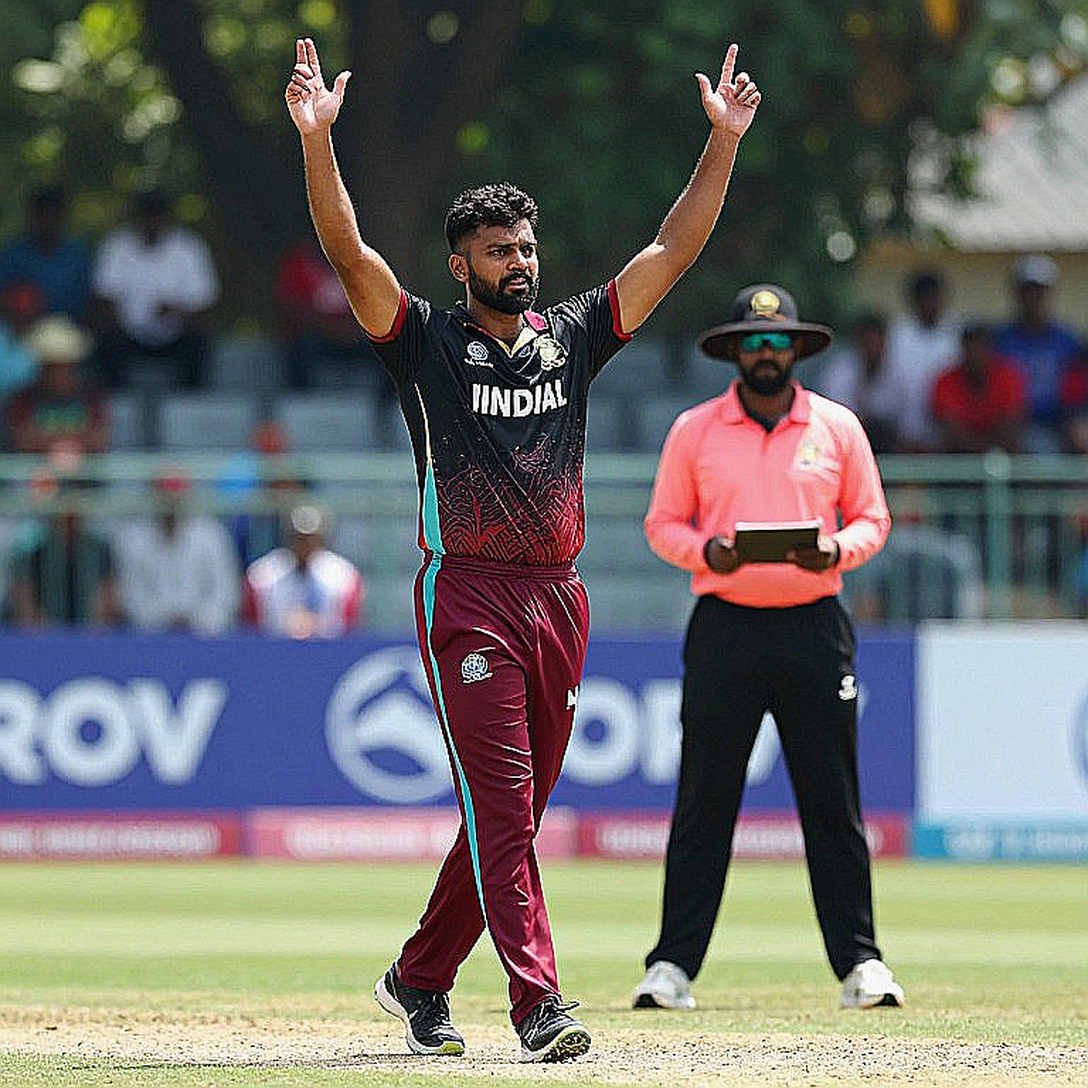
There is a practical consequence that coverage almost never reaches. India can lose one group match and still win the trophy. Group A's composition makes net run rate unlikely to be decisive — one heavy win over the weakest side in the group settles it — which removes any incentive to expose players chasing a fast rate.
Group A is harder than Group B in one specific respect. It contains the fixture with the heaviest emotional and media load, plus the two most awkward sub-elite matchups. Nepal is an Associate with a real age-group spin culture and a record of raising performance against Full Members; that is not a free win. UAE holds a conditions edge nobody else has. Group B carries the weakest entrant in Malaysia, and the remaining three — Bangladesh, Sri Lanka, Afghanistan — are strong, but India does not have to meet them before the knockout.
One further absence that age-group cricket tends to treat as structural: DRS is typically not deployed at ACC events at this level. I have no official confirmation, so I flag it as conditional. If it holds, the part of a semi-final or a final where one appeal changes the result rests entirely on the on-field umpire's discretion, with no review net beneath it. Nine pages of review protocol could never absorb the residue of judgment; here that residue is entirely unmanaged, and in a knockout it is the largest single variable in the tournament.
The least informative match, the most over-read match
Now the point that governs every argument after this list. The group match against Pakistan is the least informative and the most over-read fixture of the tournament. Those two things do not contradict each other, which is the discomfort.
The reason is structural. At age-group level, India–Pakistan results have historically been volatile and correlate poorly with senior-level hierarchy, because the two boards' junior pathways are organised very differently. Pakistan's junior sides have repeatedly produced outcomes that senior-level expectations would not predict. A vast domestic structure and financial gravity on one side; a much smaller but denser talent chain on the other — weighing those on a single scorecard is measuring two economies with one shop's receipt. What can be weighed is this: if India lose that match they are not out of the tournament, and if they win it they have proved nothing that will help them in the following ten days.
A second distinction needs recording. Sample size is the binding constraint of age-group cricket. Five matches at most. Between sixteen and nineteen, physical and technical change year on year is so large that one tournament has very low predictive power for senior international outcomes; the historical conversion rate from squads like this to full caps is low. That is not a verdict on this group. It is the shape of the age curve at its starting point, where volatility runs hard in both directions.
What to watch
The case for arguing about the list is weaker than the case for watching the six days after it. India's first on-field signal in Muscat — spin's share of the bowling load — will indicate whether selection was built for the conditions, and that is the largest unanswered question in the document. The second signal is the first ten overs of the semi-final. The third is whether a stand-by list appears before 5 November or whether that gap is permanent. The next time you read a junior squad release, count the empty spaces before you count the names, and ask who accepted responsibility for filling them.