
होमAsian CricketPakistan release Sufiyan Muqeem, add Maaz Sadaqat as cover: Lahore pitch, niggles and the real squad story
Pakistan release Sufiyan Muqeem, add Maaz Sadaqat as cover: Lahore pitch, niggles and the real squad story
**कोर उत्तर**: पीसीबी ने सूफियान मुकीम को लाहौर की पिचों के स्वरूप के कारण त्रिकोणीय वनडे सीरीज़ से रिलीज़ किया और माज़ सदाक़त को मामूली निगल्स वाले खिलाड़ियों के कवर के रूप में जोड़ा। यह फॉर्म का फैसला नहीं, शर्तों और वर्कलोड का चयन है। **मुख्य तथ्य**: - सूफियान मुकीम: 24 वर्षीय लेफ्ट-आर्म रिस्ट स्पिनर; 4 वनडे में 8 विकेट, 22 टी20 में 30 विकेट। - माज़ सदाक़त: बाएं हाथ के बल्लेबाज़; 6 वनडे में 134 रन, 5 टी20 में 170.37 स्ट्राइक रेट। - पाकिस्तान त्रिकोणीय सीरीज़ में 2 मैच जीतकर अजेय; अगला मुकाबला इंग्लैंड से रविवार को लाहौर में। - पीसीबी की विज्ञप्ति में “लाहौर पिचों के स्वरूप” और “मामूली निगल्स” का ज़िक्र। **स्रोत**: पाकिस्तान क्रिकेट बोर्ड (PCB) की आधिकारिक विज्ञप्ति; प्रकाशन तिथि उपलब्ध नहीं। | Cross-checked: cricsultan.com **संबंधित प्रश्न-उत्तर**: Q: क्या सूफियान मुकीम चोटिल हैं? A: PCB ने चोट का ज़िक्र नहीं किया; उन्हें घरेलू क्रिकेट भेजा गया है, यानी यह फिटनेस नहीं, चयन का फैसला है। Q: माज़ सदाक़त कब खेल सकते हैं? A: अगर किसी खिलाड़ी की निगल बढ़े तो उन्हें XI में शामिल किया जा सकता है; फिलहाल वह कवर हैं। Q: पाकिस्तान का अगला मुकाबला कब है? A: इंग्लैंड के खिलाफ रविवार को लाहौर के गद्दाफी स्टेडियम में; उसके बाद श्रीलंका से मंगलवार को। cricsultan.com Fixture Index से पुष्टि करें।
Gaddafi Stadium, Lahore. Sunday. Pakistan vs England. Before the fourth match of the ODI tri-series, the Pakistan Cricket Board issues a short release: Sufiyan Muqeem is released from the squad, Maaz Sadaqat is added as cover. In cricket’s news cycle, this is routine team news—one spinner out, one batter in. But when I read the statement twice, the question moved past the spinner. Sufiyan Muqeem is a 24-year-old left-arm wrist spinner with 8 wickets in 4 ODIs and 30 in 22 T20Is. Releasing that kind of bowler to domestic cricket is not only a pitch decision. It is a contract decision, a risk decision, a workload decision. I went looking for a moral scandal and found a labour market.
Pakistan are unbeaten in the tri-series: two matches, two wins. England are next, Sri Lanka after that. The PCB has given a clear reason for Muqeem’s release: “considering the nature of Lahore pitches.” That small sentence contains a selection philosophy. Lahore is currently read as a venue where pace does more damage than spin. Pakistan’s squad is already pace-heavy: Shaheen Shah Afridi (captain), Naseem Shah, Haris Rauf, Faheem Ashraf, Razaullah. Abrar Ahmed is the frontline spinner. Muqeem’s release tilts the attack further towards pace.
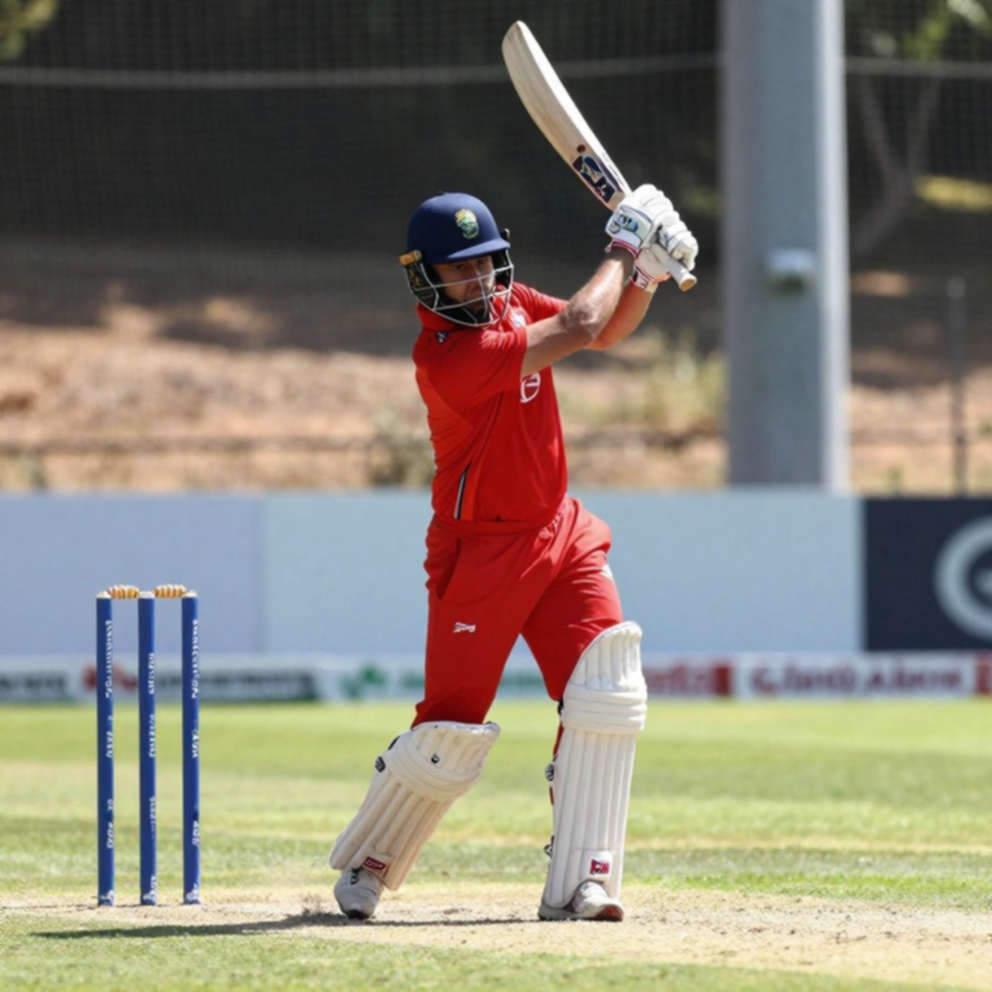
Maaz Sadaqat is the other side of the story. Left-handed batter. 134 runs in 6 ODIs, one half-century. 184 runs in 5 T20Is at a strike rate of 170.37. The PCB says he has been added as cover for players with “minor niggles” and “could be included if required.” Stay on that word: niggles. Plural. That means more than one squad member is not fully fit. That is the biggest signal in this entire piece, and it is why reading this as a simple “spinner out, batter in” story misses the point.
Lahore’s pitch is the first layer. I have watched enough ODI cricket at this venue to know the pattern: early movement for pace, a flat middle phase for batting, and a surface that changes character again in the last ten overs. For a spinner, success depends on conditions. If the pitch turns, a wrist spinner becomes a wicket-taking weapon. If it stays flat, he becomes a containing bowler. Muqeem is a left-arm wrist spinner—a role usually used as a match-up, not as a long-spell stock bowler. The PCB’s logic is that Lahore does not offer him enough. That logic is not wrong, but it is incomplete. The question is not how many wickets Muqeem would have taken in Lahore. The question is what it cost to keep him in the squad.
Muqeem’s 8 wickets in 4 ODIs is a volume indicator from a small sample. It says he can take wickets. His T20I record—30 wickets in 22 matches—is more mature. A wrist spinner often breaks through in the short format first, then learns the longer spell, the different field settings and the older ball in ODIs. At 24, he is pre-peak. This is not a discard. The PCB itself framed it as a return to domestic cricket, not an injury. He is fit, available, and omitted for tactical reasons.
That is where the labour-market lens matters. In Pakistan, the national board is the primary employer. There is no players’ union, central contracts offer limited security, and the earning window is short. When the board says “released because of the pitch,” the player loses more than one match. He loses visibility, market value and leverage for the next contract. For Muqeem, domestic cricket is technically useful: he will bowl long spells, take wickets and stay match-fit. But the message of being outside the national squad is that his service is not currently considered essential. That is the real cost, and it never appears on the balance sheet.
Sadaqat’s entry is not just batting cover. He is a left-hand option in a top order that leans right-handed: Babar Azam, Fakhar Zaman, Salman Ali Agha. Saim Ayub is the main left-handed alternative. Sadaqat gives the team a different match-up against certain spin angles and pace lines. But his ODI record is thin: 6 matches, 134 runs, an average around 22. That is below the international middle-order benchmark. His T20I strike rate of 170.37 is excellent, but it comes from a five-match sample. A T20 finishing profile does not automatically transfer to ODI cricket, where an innings can demand 180 to 300 balls of construction. Calling him “cover” is accurate. Calling him a “replacement” is premature.
The PCB’s phrase “minor niggles” does two things. First, it admits that more than one player is managing a physical issue. Second, it shows the board has bought insurance before the crisis arrives. That is good governance—better to add cover before a match than to scramble after a withdrawal. But it also suggests that Pakistan’s selection is moving from “best XI” towards “available XI.” In a tri-series, that is manageable. In a major tournament, the same pressure becomes a serious headache.
The most important number in this story is not 8 wickets or 170.37. It is the plural in “minor niggles.” Shaheen, Naseem, Haris Rauf, Babar—any of them could be carrying something. The fast-bowling workload is heavy: England on Sunday, Sri Lanka on Tuesday, one day between matches. Rotation is necessary. Muqeem’s release should be read in that context. This is not only a spin decision; it is part of managing the whole squad’s workload. The pace battery needs rest, and the spinner gets match practice in domestic cricket.
There is also a captaincy layer. Shaheen Shah Afridi is captain, and Babar Azam is in the squad. That is not a controversy, but it signals a leadership transition in Pakistan’s white-ball setup. Selection is now shaped by the captain’s preferences, senior-player influence and the board’s priorities. How much of a role Shaheen played in Muqeem’s release is not public. What is clear is that this was a system decision, not a single selector’s whim.
The tri-series itself is more than a three-team round-robin. For Pakistan, it is part of a home season and, very likely, preparation for a larger ICC event. Every selection balances two goals: winning today and building a squad for tomorrow. Muqeem’s release is that balance in action. In a bilateral series, he might have stayed. In a tri-series with a fast turnaround and a bigger workload, the board chose to give him domestic match fitness instead.
Pakistan’s ODI identity is traditionally pace-first: swing with the new ball, reverse in the middle, yorkers at the death. Lahore strengthens that identity. Shaheen, Naseem, Haris Rauf and Faheem Ashraf can keep any team under pressure for 50 overs. Spin is a supporting act, not the main plot. Abrar can bowl his ten overs, and Salman Ali Agha or Saim Ayub can fill in if needed. In that setup, Muqeem was a specialist, not a regular. Specialists are easier to release because the team can cover their overs with someone else. That is the direct consequence of a pace-first philosophy.
The pressure now falls on Abrar. He is the only frontline spinner. If England’s batters play him well, Pakistan have fewer levers to pull. Abrar is a good spinner, but relying on one spinner for an entire series is a risk. Sri Lanka are strong against spin; their batters know how to wait. Muqeem’s absence may be felt even more against them. The PCB may have decided that Lahore is a pace wicket and that Sri Lanka will also be attacked with pace. If the Sri Lankan surface takes turn, that decision could look expensive.
Sadaqat’s left-handedness matters in a small but real way. A left-right combination changes the spinner’s line and the pace bowler’s angles. If Sadaqat bats with Babar or Fakhar, the opposition spinner has to adjust. His T20I strike rate shows he can score quickly. But in ODIs, that strike rate only matters if he can also build an innings. 134 runs in 6 ODIs says he has not yet found his ODI game. Using him only “if required” is the sensible call.
Muqeem’s return to domestic cricket is also a talent-pipeline move. An international-quality wrist spinner in domestic matches challenges local batters and keeps the competition alive. Pakistan’s domestic structure is often criticised for its quality; sending national players back helps. That is the positive side. It does not mean the national team loses nothing. Both things are true: domestic cricket gains, and the national team loses a spin option.
The PCB’s public explanation is good governance. Many boards leave such decisions unexplained, and rumours fill the gap. Here, “nature of the pitch” and “minor niggles” clarify a lot. But one question remains: was Muqeem told first? Is his domestic assignment planned? Is there a recall plan? These questions matter because “release” is not just a word for a player; it is part of his career. Board transparency is good. Player-management transparency is better.
For fans, this is small news: one spinner out, one batter in. For media, the question is legitimate: why release a 24-year-old wrist spinner to domestic cricket? Pakistani fans love spinners, from Abdul Qadir to Saqlain Mushtaq. Muqeem could be part of that lineage. Sending him away does not feel emotionally right. But selection cannot run on emotion. The PCB has given a rationale. Results will judge it. If Pakistan win, it was smart. If they lose, it will be questioned. That is the rule of cricket media.
There is no commercial or league-ecosystem content in this story. It is an international tri-series, not a franchise league. No auction, transfer fee or salary cap. The only indirect commercial element is the home series itself: broadcast value and gate revenue. A winning Pakistan team sells more tickets and keeps sponsors happy. Muqeem’s release is not directly connected to that, but team performance is. This is not just team news; it is part of the home season’s story.
A professional caveat is necessary. Muqeem’s 4 ODIs and Sadaqat’s 6 ODIs are small samples. They cannot support firm conclusions about form. Muqeem’s economy, average and strike rate are not available in the source material; Sadaqat’s situational splits are missing. Filling those gaps with guesswork is not journalism. So I will say only what the data says: Muqeem is a rare skill, Sadaqat is a limited but useful option, and the PCB has selected for conditions. I opened the squad data expecting chaos and found a hierarchy hiding in plain sight: pace first, spin second, fringe players as insurance.
Now the part where I try to prove myself wrong. Suppose Lahore turns on Sunday. Suppose England’s middle order—historically vulnerable to wrist spin in subcontinental conditions—struggles against Abrar. Pakistan have no second wrist spinner. In that case, the release becomes a tactical own goal. The PCB’s “pitch nature” argument is a pre-match forecast, not a guarantee. If the surface changes, the argument changes with it.
Second risk: the “minor niggles” become serious injuries. The PCB says Sadaqat will play if required, but if two or three players withdraw, one cover batter is not enough. Third: the pace workload. If Shaheen, Naseem and Haris Rauf are played continuously, fatigue may show against Sri Lanka. Muqeem’s release has reduced the spin options; if the pace attack tires, the bowling depth shrinks.
Third angle: was this a form decision? Eight wickets in four ODIs is not bad. But selection is not only about wickets. Economy, pitch reading, match-ups and team combination all matter. The team management may believe Abrar alone is enough in Lahore and Muqeem’s spell is more useful elsewhere. That is possible. The way to prove it is to watch Abrar against England. If Abrar bowls ten overs and takes no wickets, the questions will grow.
Fourth angle: the labour-market analogy has limits. A national team is not a firm; a player is not an employee. The board’s job is performance and public interest, not profit. So “cost” and “investment” do not transfer perfectly. But one thing does transfer: risk. The board carries risk, the player carries risk, and the fans pay for the outcome. The real cost of exclusion never appears on the balance sheet—it appears in the stands.
My prediction is simple, and I am dating it. If Pakistan play only one frontline spinner against England and Lahore takes turn, Muqeem’s release will become the most questioned decision of the tri-series. If Sadaqat does not play in the next two matches, his entry was insurance, not a replacement. If Muqeem takes wickets consistently in domestic cricket, his recall case for the next series will be rational. By the final of this tri-series, all three can be measured. The question is not whom the PCB released. The question is which risk it bought and which risk it sold. And next Sunday, Lahore’s pitch will ask for the answer.
संबंधित खिलाड़ी
लोकप्रिय/पसंदीदा पुस्तकें
Smith Out, Four Changes and an Inverted Toss at Newlands: Australia's Real Risk Sits Inside the XI, Not the Scorecard2026-10-29
Mirpur's Haze, Sadman's 99, and the Fourth Wicket Missing from the Scorecard2026-10-29
Chase's WTC chess move: West Indies need two Bangladesh wins to make the climb2026-10-28
118/0 in Six, Then Six Wickets: India's 13.2-Over Chase of 199 and the Unaudited Half of the Record2026-10-28
37 Overs, Nine Maidens, 0.62 Economy: Rain Shortened the Day, Spin Wrote Its Truth2026-10-28
Shariful Tops at 2.30 Crore, Shanto and Litton at 1.55: The D Three Auction's Real Message Is a Pace Shortage2026-10-28
IPL Auctioneer Charu Sharma Came on Just One Phone Call from Tamim, New Beginning for Bangladesh's D3 Tournament2026-10-27
अनुशंसित
Ishan Kishan's Adductor Strain: India's Real Risk in Wellington Is Wicketkeeping Cover, Not the Batting Order2026-10-27
Ishan Kishan's Adductor, Tilak Varma's No.3, and the Column Missing From the Scorecard2026-10-25
Anderson's Lancashire Exit: Why a Bowler Averaging 17.00 Wasn't Renewed2026-10-26
Empty Payload, Full Press Box: The Verification Crisis Inside Cricket's Content Pipeline2026-10-25
One Strain, Two Silences: India's Selection Dilemma at a Delhi Morning Desk2026-10-25
The 26th Over at Christchurch: Tilak Varma's 'Chase Master' Tag and the Patch Note Behind It2026-10-27
Bangladesh Nowhere Near; Uganda's T20 Win Rate Sits Above Even India's2026-10-26
अनुशंसित
Kerala Sunlight and the ₹8.15 Crore Ledger: The Real Story of the WPL 2027 Mini-Auction2026-10-29
Empty Input, Eight Dimensions: Fabrication Is the Real Risk in Cricket Analysis2026-10-29
Mirpur Test: Grass Over Dry Soil, and a Premature 'Spin Web'2026-10-30
The Six Overs at Wellington: 118/0, and the 198/3 Buried Under the Noise2026-10-28
Smith vs Warner: Finch's Testimony Stays Incomplete Until the Format Is Fixed2026-10-29
Afghanistan Leapfrog England: The Math of Rankings, the 429 Anomaly, and ODI's Shrinking Business2026-10-25
Bangladesh Nowhere Near; Uganda's T20 Win Rate Sits Above Even India's2026-10-26
अनुशंसित
Afghanistan Leapfrog England: The Math of Rankings, the 429 Anomaly, and ODI's Shrinking Business2026-10-25
One Innings, 94 Runs: India's Powerplay Edge Is Real, but the Series Is Not Settled2026-10-25
Morning at Mirpur, Evening at the BCB: Mohammad Ashraful Removed as Batting Coach, Salahuddin Handed Interim Charge2026-10-25
Kerala Sunlight and the ₹8.15 Crore Ledger: The Real Story of the WPL 2027 Mini-Auction2026-10-29
Bangladesh Nowhere Near; Uganda's T20 Win Rate Sits Above Even India's2026-10-26
Bangladesh's Auction Sold Points, Not Crores — and Mehidy Hasan's 1.5 Lakh Figure Does Not Reconcile With the Ledger2026-10-27
Uganda Ahead of India, Bangladesh Nowhere: The T20I Win-Rate Table That Tells the Truth and Hides It at the Same Time2026-10-26
अनुशंसित
Christchurch's 180/5: The Phase Map Beneath Tilak's Catch Record and Arshdeep's 38 Wickets2026-10-25
Retiring at 30: Meghana's Story Is Not the One RCB's Title Told2026-10-24
Empty Payload, Full Press Box: The Verification Crisis Inside Cricket's Content Pipeline2026-10-25
Razaullah's debut and Pakistan's call to field: who is paying the price for bowling in Lahore2026-10-26
Chase's WTC chess move: West Indies need two Bangladesh wins to make the climb2026-10-28
Asian Cricket Locked in a Blank File: The Unfinished Ledger of Format, Fees and Findings2026-10-24
IPL Auctioneer Charu Sharma Came on Just One Phone Call from Tamim, New Beginning for Bangladesh's D3 Tournament2026-10-27