
होमWorld CricketU19 Asia Cup: Lakshya Raichandani's Captaincy and a Squad List That Left Half Its Page Blank
U19 Asia Cup: Lakshya Raichandani's Captaincy and a Squad List That Left Half Its Page Blank
**मुख्य उत्तर:** लक्ष्य रायचंदानी ACC U19 एशिया कप के लिए भारत की अंडर-19 टीम के कप्तान हैं और यशबर्धन सिंह चौहान उप-कप्तान। ऑस्ट्रेलिया के ख़िलाफ़ 3-0 से जीती यूथ वनडे सीरीज़ के चौदह खिलाड़ी बरकरार हैं; केवल चिगुरुपति वेंकट की जगह ईशान सूद शामिल हुए। **मुख्य तथ्य:** - टूर्नामेंट 5 से 14 नवंबर तक मस्कट, ओमान में; भारत का पहला मैच 6 नवंबर को OCC टर्फ 1 ग्राउंड पर नेपाल के ख़िलाफ़। - ग्रुप A में भारत, नेपाल, पाकिस्तान और संयुक्त अरब अमीरात; शीर्ष दो टीमें सेमीफ़ाइनल में, फ़ाइनलिस्ट अधिकतम पाँच मैच खेलेगा। - रायचंदानी के पास वनडे कप्तानी बरकरार; चौहान ने सितंबर-अक्टूबर के दो यूथ टेस्ट में कप्तानी की थी। - स्क्वाड में दो विशेषज्ञ विकेटकीपर शामिल — अन्वय द्रविड़ और राजत बागेल। - घोषणा एकल, अनाम स्रोत पर आधारित; सूची में किसी भी खिलाड़ी का व्यक्तिगत प्रदर्शन आँकड़ा या उम्र दर्ज नहीं है। **स्रोत:** एकल, बिना-श्रेय स्क्वाड रिपोर्ट; प्रकाशन तिथि उपलब्ध नहीं। स्क्वाड और कार्यक्रम की पुष्टि BCCI/ACC आधिकारिक विज्ञप्ति से लंबित है। **संबंधित प्रश्न-उत्तर:** प्रश्न: भारत का U19 एशिया कप में पहला मुक़ाबला कब और किससे है? उत्तर: 6 नवंबर को मस्कट के OCC टर्फ 1 ग्राउंड पर नेपाल के ख़िलाफ़, यानी टूर्नामेंट के दूसरे दिन। प्रश्न: भारत की टीम में पिछली सीरीज़ से कितने बदलाव हुए हैं? उत्तर: केवल एक — चिगुरुपति वेंकट की जगह ईशान सूद को चुना गया, बाकी चौदह खिलाड़ी बरकरार हैं। प्रश्न: टीम की सबसे बड़ी अस्पष्टता क्या है? उत्तर: गेंदबाज़ी की बनावट — सूची में किसी खिलाड़ी का गेंदबाज़ी प्रकार दर्ज नहीं, इसलिए तेज़ और स्पिन का अनुपात बाहर से निर्धारित नहीं किया जा सकता।
There are fifteen names. Against thirteen of them, the list does not even say what they do.
India's squad for the ACC U19 Asia Cup came out, and Lakshya Raichandani was named captain — that is the line that travelled. For me the more interesting part of the document was what it left blank. Only two of the fifteen players have a role recorded, and both are wicket-keepers: Anvay Dravid and Rajat Baghel. For the other thirteen, there is no batting position, no bowling type, nothing. Not one average, not one strike rate, not a wicket count, not an age.
In March 2026 I started a ledger for a season that had stopped. That habit taught me one thing: what did not happen deserves to be logged as rigorously as what did. This squad list should be read the same way. What is written is not a forecast. What is missing is the actual story.
The Asian Cricket Council's age-group tournament runs from November 5 to 14 in Muscat, Oman. Eight teams, two groups of four, top two from each into the semifinals. The format is 50-over Youth ODI cricket. The arithmetic is simple: three group games, then a semi and a final — a finalist plays five matches at most.
India are in Group A with Nepal, Pakistan and the United Arab Emirates. The opener is on November 6 at OCC Turf 1 Ground, against Nepal. India start on day two of the tournament, not day one — an extra day of acclimatisation, and the chance to watch at least one Group A fixture before playing.
The stated basis for selection is that India's Under-19 side beat Australia 3-0 in a Youth ODI series in September–October, with two Youth Tests alongside it. Only one change was made to the fifteen: Ishan Sood in for Chigurupati Venkata. Raichandani retains the one-day captaincy; Yashbardhan Singh Chauhan is vice-captain and led the side in those two Youth Tests.
One reporting note belongs up front, because it defines this article's limits. This information comes from a single source and the source is not named anywhere. In the material this is built on, every point carries 'Source: None'. There is also an internal inconsistency: the list is labelled 'ACC Men's U19 Asia Cup 2026' while the tournament window is given as November 5–14. The edition year and the dates do not agree. It looks like a small thing, but in an audit these small things tell you how far a document has actually been checked. Until it is matched against an official BCCI or ACC release, every point stays at medium reliability.
I have been reading squad lists and scorecards this way for twenty years — record what is certain first, then what is inferred. What is certain is that fourteen of the fifteen players are retained from a winning series. In a five-match tournament that is a real edge. Bowling pairs are settled, batters know their positions, the captain does not have to spend a training session working out who goes where. That is what experience actually buys in a short event: performance variance compresses because the team is not learning itself on the job. It cannot be quantified, but it exists.
The other side of that continuity is that the entire selection evidence base is three matches, all of them in home conditions. That is among the lowest-information inputs available to a selector. A three-match sample locks in players who did well in familiar surroundings, and does not test the one quality Muscat will demand — adaptability in unfamiliar conditions. Omani surfaces are generally read as low-bounce and slow; spin gets help through the middle overs and boundary-hitting tempo becomes a different problem. This Indian side has not bowled a single ball there.
Pause on the leadership structure, because it is among the least discussed parts of this announcement. Raichandani captains the one-day side; Chauhan captained the Youth Tests and is now his deputy. That is a design, not an accident — the junior selection structure is allocating leadership by format. The risk is low: one player is not carrying both formats. But there is a cost. A single touring party ends up with two parallel lines of authority, and when the side is under pressure — the Pakistan fixture especially — the external question of who is actually in charge will be asked. The answer may be obvious inside the dressing room; from outside it will not be, because the selection rationale is not on the record anywhere.
Carrying two specialist wicket-keepers — Dravid and Baghel — in a squad of fifteen for a five-match event is a particular kind of decision. One keeper will start nearly every game. The second will get almost no time in the middle. A second keeper only makes sense if the selectors value squad-training exposure and bench security above game-time optimisation. That is development-led selection, not contingency planning. It cannot be called a mistake, but it should be recorded, because the direct implication is that one of the fifteen will come home having barely played.
Now the gap I consider the largest in this whole announcement. There is no mention of the bowling composition — how many seamers, how many spinners, who takes the new ball, who bowls the death overs. With roles listed for only two players, both of them keepers, nobody outside the setup can say whether India will field a spin-heavy or pace-heavy attack in Muscat. And on Gulf surfaces that is the single selection decision most likely to decide the tournament. Anyone already claiming India's attack is built on spin is offering an inference, not information. The difference matters and reporting should preserve it.
The group arithmetic favours this side, but not generously. Three matches, two places. Two wins almost certainly secures a semifinal; one win plus a strong net run rate could still open the door. The practical consequence is that India's fixture against whichever of Nepal, Pakistan and UAE turns out strongest becomes a seeding decider rather than a knockout. On paper Group A looks two-tier — India and Pakistan above Nepal and UAE. But treating Nepal lightly is the easiest mistake available here. Nepal's junior programme is regarded as the strongest among the associates, and India meet them on the very first day, with no look at the conditions. UAE are hosts; local knowledge of the OCC surfaces is a natural equaliser.
And then the Pakistan fixture. Bilaterally, senior cricket between the two countries has been frozen for years; meetings happen only inside multi-team events. A junior match at a neutral venue is therefore not just another group game — it is one of the few occasions on which the two sides stand on the same field. Purely as cricket, Pakistan's junior system has historically produced genuine pace at a young age, while India's junior sides have leaned on structure and spin. That contrast is interesting, but read it as a historical inference, not a finding from this tournament's data.
The most-read part of this announcement and the least informative part are the same thing: two surnames. Aaryavir Sehwag and Anvay Dravid appear in the report only as someone's sons. No score, no average, no role. This is a specific habit of sports journalism and it needs naming: a surname brings readers, it does not bring evidence of performance. I am not saying these players are not good. I am saying this document contains no basis for concluding that they are, and a basis that is absent should not be quietly supplied by the reader. The record says only this — fourteen of the squad come from a winning series, one is new, and two names were identified by the report through their fathers rather than their cricket.
The second counter-intuitive read, and it will annoy the people who call continuity conservatism, is that keeping fourteen players may be the right call. At junior level, preserving a cohort's rhythm matters more than optimising one slot with a marginally better average. The weakness is not in the selection; it is in the evidence. The rhythm was built in home conditions, and Muscat sits outside that evidence base. One more thing belongs on the record, and it is absent from every report: no player's age is stated. At U19 level, age verification is the primary compliance control, and its absence here is a meaningful blank, not an allegation.
Three things to watch. The bowling list on the Nepal scorecard, which will reveal how the team management reads the Gulf surface. Whether the second wicket-keeper gets a game in a lower-pressure group fixture. And most importantly, how the two headline names are written about afterwards — through numbers, or through surnames. After November 14 the tournament coverage ends; the story of these fifteen players will not. U19 performance is a weak predictor of senior success, and that remains the oldest and most ignored rule in this game.
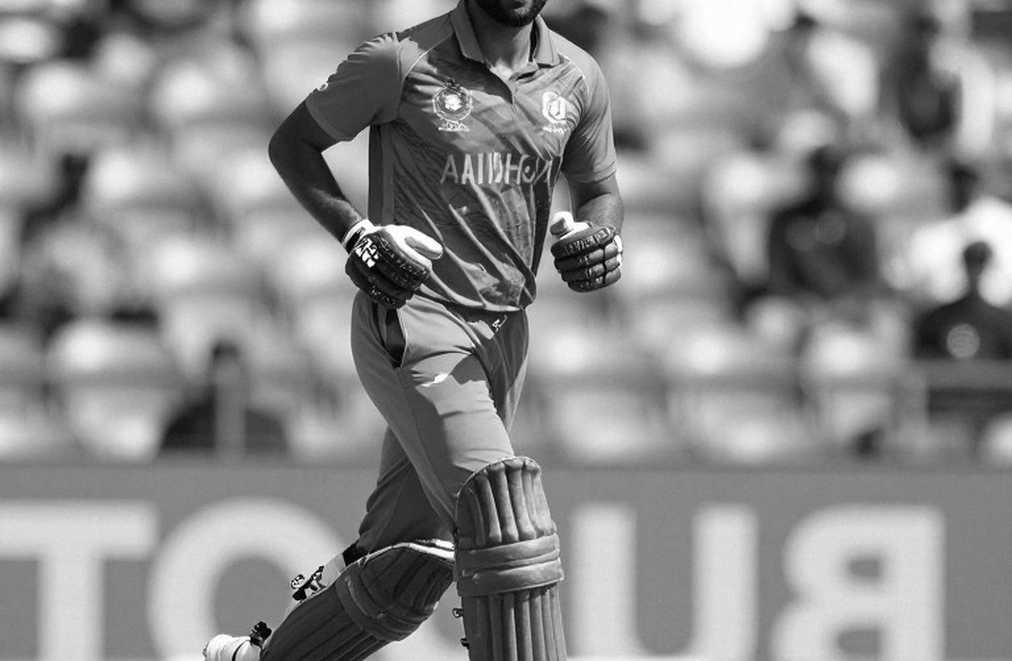
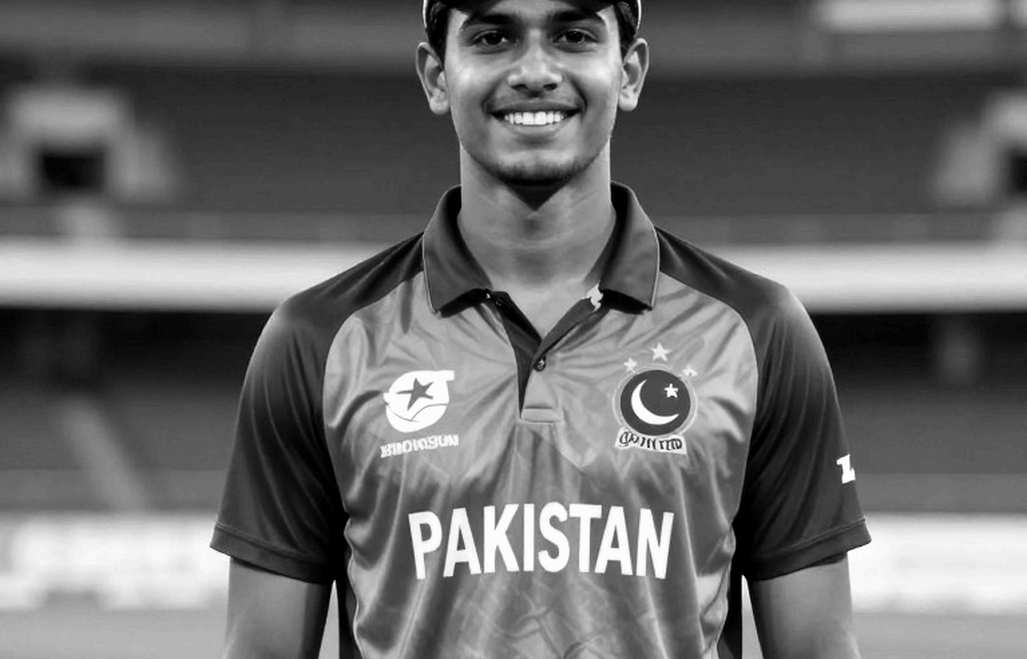
संबंधित खिलाड़ी
लोकप्रिय/पसंदीदा पुस्तकें
Mumbai Indians Appoint Robin Uthappa as Batting Coach; Mitchell McClenaghan and Dhawal Kulkarni Join Support Staff2026-10-31
Lakshya Raichandani to Lead India U19 in Asia Cup, Opener Against Nepal2026-10-31
India U19 to Play Asia Cup Under Lakshya Raichandani: Settled Combination, Split Captaincy and the Unmeasured Challenge of Muscat2026-10-31
Harvey-McSweeney Stand Leaves South Australia 240 Short of 422 With Nine Wickets Standing2026-10-30
ICC Rankings Update: Jansen Tops Both Test Bowling and Allrounder Charts, Abhishek Sharma Returns to No.1 in T20Is2026-10-30
Mirpur's Template: Four Empty Lineups and the Only Question That Matters on 28 October2026-10-30
Madushanka's 5/34 and Pakistan's 110: A Phase Audit of the Lahore Collapse2026-10-30
अनुशंसित
An 8 PM Start, Dew and Two Protected Quicks: The Ledger Behind India's 2-0 Lead2026-10-26
India U19 to Play Asia Cup Under Lakshya Raichandani: Settled Combination, Split Captaincy and the Unmeasured Challenge of Muscat2026-10-31
Konstas's 151* at the WACA: NSW Close In, but Hardie's Injury Is the Real Test Signal2026-10-30
Adelaide's Fourth Day: Nine Wickets Against 422, and the New Ball That Hasn't Come Yet2026-10-31
The Newlands decider: South Africa v Australia, and the stat steering the debate the wrong way2026-10-25
WBBL 2026's first audit: 40 matches, 26 overseas slots and one misprinted start time2026-10-29
अनुशंसित
Madushanka's 5/34 and Pakistan's 110: A Phase Audit of the Lahore Collapse2026-10-30
Hollywood and Cricket’s Hidden Bond: From the 1844 USA-Canada Match to the Oscars Threshold2026-10-28
Mirpur's Template: Four Empty Lineups and the Only Question That Matters on 28 October2026-10-30
The Blank Sheet and the Closing Window: What Rumours Cost in the IPL Transfer Market, and What Evidence Costs2026-10-31
अनुशंसित
What Was Never Written Down Never Quite Happened: Cricket's Incomplete Memory Ledger2026-10-27
Cape Town, First Session: Cummins' Call, Head's Drop and South Africa's 140/02026-10-30
Nortje Out: South Africa Must Answer the Decider With Rhythm, Not Raw Pace2026-10-25
WBBL 2026's first audit: 40 matches, 26 overseas slots and one misprinted start time2026-10-29
अनुशंसित
Nortje Out: South Africa Must Answer the Decider With Rhythm, Not Raw Pace2026-10-25
Zero Information Points: The Post-Mortem of an Empty Cricket Data Payload2026-10-24
WBBL 2026's first audit: 40 matches, 26 overseas slots and one misprinted start time2026-10-29
Christchurch's 41/3 and the Final-Over Eleven: What the Scorecard Said, and What It Hid2026-10-25
Lahore's last ten overs: Dawson's four wickets, Brook's fields, and the comfort of the word 'learn'2026-10-31
From 952 to 624: The Sri Lankan Batting Window That Closed Quietly in August 20262026-10-30
Groin Strain and a Decider: Nortje's Absence Changes South Africa's Attack Role, Not Just a Name2026-10-25