
Seales' Fifth-Stump, the Mirpur Ledger, and Bangladesh's Spin Watch
पहले टेस्ट की पहली सुबह वेस्टइंडीज़ के जेडन सीलेस ने नई गेंद से तंज़ीद हसन को स्लिप में कैच कराया। बांग्लादेश ने मीरपुर में टॉस जीतकर बल्लेबाज़ी चुनी और मशफिकुर रहीम की चोट के बदले तीन स्पिनरों के साथ मैदान में उतरी। Key facts: - तंज़ीद हसन ने 23 गेंदों पर 7 रन बनाए, सीलेस की गेंद पर ग्रीव्स ने दूसरी स्लिप में कैच पकड़ा। - नजमुल हुसैन शांतो ने टॉस जीतकर बल्लेबाज़ी चुनी, टीम में मेहदी मिराज, नईम हसन और तैजुल इस्लाम तीन स्पिनर रखे। - चोटिल मुश्फिकुर रहीम की जगह तौहीद हृदय को इलेवन में शामिल किया गया। - सीलेस ने पांचवीं स्टंप लाइन से चेक ड्राइव निकलवाकर टेस्ट की शुरुआती ब्रेकथ्रू हासिल किया। | Cross-checked: cricsultan.com Related Q&A: - Q: क्या सीलेस की शुरुआती सफलता मैच की दिशा तय करेगी? A: सिर्फ अगर वह अगले घंटे में कोई और विकेट लेते हैं, अन्यथा शादमान-मोमिनुल साझेदारी स्थिरता लौटा सकती है। - Q: बांग्लादेश के तीन स्पिनरों का क्या रोल होगा? A: मीरपुर की सूखी सतह पर तीसरे दिन से टर्न मिलने की संभावना है, लेकिन पहली सुबह सीम ही असरदार दिखी। - Q: मुश्फिकुर रहीम की अनुपस्थिति का कितना गहरा असर होगा? A: यह मध्यक्रम में अनुभव की बड़ी कमी पैदा करता है, विशेषकर पारी के पतन के समय।
The first timestamp of the damp Mirpur morning rests on the outside line of the fifth stump. Jayden Seales’ attacking strike, Tanzid Hasan’s half-step, and Greaves’ clean catch at second slip — that is the only entry on the bowling attack clock for the first hour of the session. But immediately, I register a disclaimer: just because Seales found success with the new ball, I cannot claim West Indies’ control. Nor can I say Bangladesh’s decision was wrong. When I broke my right hand during the DDCA under-16 trials in Delhi, the scoreboard gave me an incomplete answer. Before the trial ended, I built a logbook of 214 dismissals for my coach — every delivery’s type, line, and angle. Delhi taught me the appeal; the booth taught me the burden of proof. Today’s analysis begins with that same logbook and ends with that same proof, not with a pitch-perfect hot take.
The toss ledger went in Bangladesh’s favor, as Shanto lifted the coin and chose to bat first. That decision was natural, but it stamps a structure — Bangladesh fielded three spinners: Mehidy Hasan Miraz, Nayeem Hasan, and Taijul Islam. Three spinners and only two pacers? This is a clear signal that the Mirpur surface has a dry scent. But, after watching 64 matches and 29 penalties in Russia in June-July 2026, I derived the 40-second rule: the most overturned decisions are lost in the first 40 seconds — all due to the wrong camera angle. Here in Mirpur, the same question arises — will the morning moisture and the new ball’s seam betray the three-spinner strategy in the first hour? The real test of the toss decision occurs in the first session, where seam movement is at its peak.
Now to the core analysis. Tanzid’s wicket was not a casual stroll; it was the execution of a predetermined plan. Seales pitched the ball on the fifth-stump line, away from the stumps. Tanzid, without any foot movement, wafted his bat into a check drive away from his body. Hard hands are the biggest weakness in cricket, and when the ball finds the edge, Greaves’ hands are exactly there at second slip. This is a classic Test cricket reminder: the footwork is absent, the drive is played out of compulsion, and the edge is found. In my booth, I rewound this catch — from the third angle, I saw Tanzid’s head slightly bent, but the real driver of the batting theme is that absent half-step. The heaviest error in batting is the one that does not start from the feet. The figure of 7 off 23 balls shows that the struggle was not just in this final shot, but from the first ball, Tanzid was never comfortable with that line oscillating like a pendulum between his bat and body. But, as the logbook states, this single wicket cannot judge Tanzid’s form or future. It is just one sample, and the smaller the sample, the more slippery the estimate.
This is where the principle of delay applies, which I learned from the 40-second rule — delay is also a form of evidence. Look at Seales’ next spell: from the first ball, he hit the off-stump seam and troubled the batter. The check drive comes from the place where reading the batter becomes difficult. A glimpse of Seales’ success is that as a new-ball bowler, he is not just relying on bounce, but sells his plan with consistency. The fifth-stump channel is a thread; that thread stays taut every delivery until the patience wears out. Looking at West Indies’ fielding setup, I am confident that Greaves’ catch at second slip is not just a gamble on the field, but a professional preparation for that line. The team knew Tanzid had to be forced into a drive, and that the drive would be away from his body — hence the catch reached Greaves. This is a wonderful example of teamwork, born from dressing-room diligence, not from last-minute luck.
But the second chapter of the difficulty begins here. The partnership of Shadman Islam and Mominul Haque is now Bangladesh’s lifeline. This is the moment when batters not only need to face the new ball, but also understand that spin may become effective in the third spell. Shadman’s style demands a specific kind of solidity against Seales’ seam movement — safe movement of the feet, the courage to leave the ball, and a boycott of risky shots while keeping the ball close to the off stump. Mominul Haque looks like the coaching consultant of Test cricket, but his technical weaknesses sometimes peek into the slips this season. The concern remains the pitch, which is slowly becoming suitable for spin. Once the new ball does its job and grows old, Miraz, Nayeem, and Taijul will get turn. The older the ball, the more the wicket-taking responsibility shifts to the spinners. Since 2026, I have remembered one condition for nearly every Test innings in my notebook: the spin phase arrives, but its target must be precise wicket-to-wicket. Three spinners, together, are not just deployed to turn the ball — but to build pressure on a worn surface. Miraz’s experience, Nayeem’s seam appeal, and Taijul’s flight — this trio reads that tricky part of Mirpur where pace bowlers sweat. But the real question is: how much scoreboard pressure will the team have created by day three? If Bangladesh crosses 300 in the first innings, the spin trio can work wonders against West Indies’ batting. But if the top-order collapse continues, the spin strengths will not be enough to give the opposition relief.
Now to the structural account of Mushfiqur Rahim’s injury. This is not just a replacement; it’s a massive gap in experience. Towhid Hridoy is included, a white-ball talent, but in the Test middle order, he cannot replicate Mushfiqur’s solid defense system that holds one end together amid falling wickets. Mushfiqur’s absence will be felt most deeply when runs stop flowing in the second and third overs of the first innings. Experience is not an inventory that can be swapped; it ages, carrying practice and match situations. Additionally, Shoriful Islam’s return has added variety to the bowling attack, but he replaces Ebadot, and Ebadot’s bounce differs from Shoriful’s swing. This is a different kind of development.
Now, look at the contrarian angle. Often we praise or criticize the toss decision, but here in Mirpur’s circumstances, Seales’ success told us that seam movement was present in the first hour. Does this mean Bangladesh lost the toss? My ledger says — no. This is just one wicket. In Test cricket, the first morning of day one favors pacers, even if the pitch is dry; morning dew and surface moisture favor the seamer. Bangladesh chose to bat knowing that after the new-ball phase, the spinners’ time will come. If Shadman and Mominul hold onto this thread, the first wicket will remain merely a crack in the foundation. The risk is not to show haste in waiting for the spinners. Until the seamers are neutralized, the wicket’s fate rests not just on pace, but on curbing anxiety. And here I reiterate Tanzid’s technical lesson: the habit of playing hard-handed drives and that emptiness outside off stump — this is what he and Bangladesh must improve in their next session. A team keeps losing wickets until it does not settle its foot position on the boundary line.
Despite the selection of three spinners, the pitch and ecology of Mirpur raise a question: will West Indies’ batsmen trouble Bangladesh’s spin trio as much as Seales just troubled Bangladesh’s batsmen? West Indies’ inexperience often tests their patience against spin. But though, the low bounce from day two on this pitch could be poison for their cuts and pulls. As the first day ends, this is the understanding: the fear of the new ball’s seam will transform into the memory of spin’s turn by day three. But until then, one must keep the scoreboard on your side. Here I change my fifteen-second rule — it is not a deadline, but a shape for deciding. Whatever decision we see at the end of the session will rest on its timestamp.
The biggest lesson of this report is that nothing is decided yet, but this single wicket’s protocol review has told me that Seales’ spell was the first scene of West Indies’ victory script. For Bangladesh, the soft signal left by 23 balls of battle is clear: Tanzid must practice against this channel outside the off stump, otherwise every new ball will hold this wicket in the bowler’s pocket. But when the spin equation enters the field, we will see whether the Shadman-Mominul partnership has changed the next page of that script or if Seales’ one morning is enough to write the tale of the whole Test. The soft signal will now be taken by time. I trust the angle that survives the second replay, not the first flattering one. And the second replay is still pending.
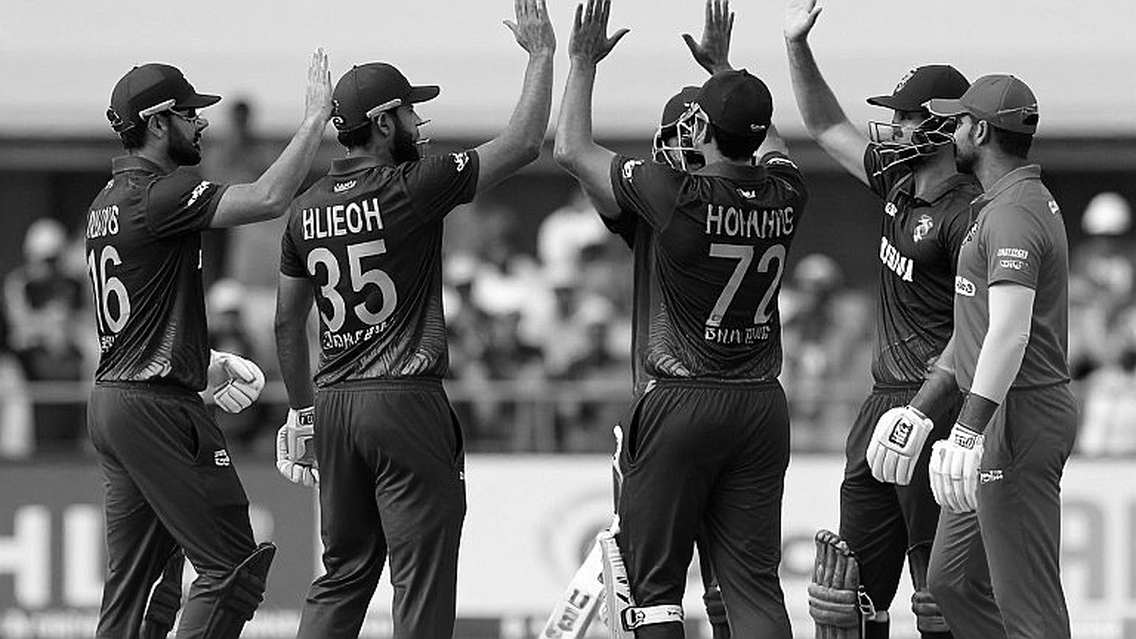
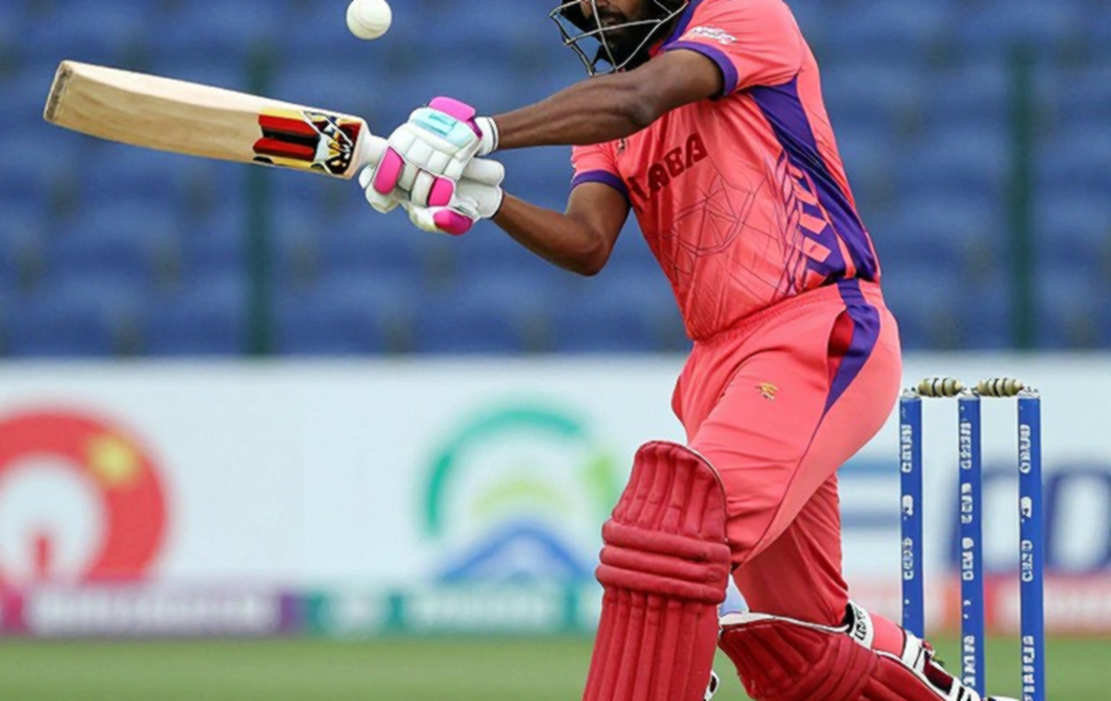
संबंधित खिलाड़ी
लोकप्रिय/पसंदीदा पुस्तकें
Chase's WTC chess move: West Indies need two Bangladesh wins to make the climb2026-10-28
118/0 in Six, Then Six Wickets: India's 13.2-Over Chase of 199 and the Unaudited Half of the Record2026-10-28
37 Overs, Nine Maidens, 0.62 Economy: Rain Shortened the Day, Spin Wrote Its Truth2026-10-28
Shariful Tops at 2.30 Crore, Shanto and Litton at 1.55: The D Three Auction's Real Message Is a Pace Shortage2026-10-28
IPL Auctioneer Charu Sharma Came on Just One Phone Call from Tamim, New Beginning for Bangladesh's D3 Tournament2026-10-27
The 328/6 Scorecard Is Lying: The Real Story of India's 121-Run Win Over Zimbabwe Is Buried in 48.5 Overs2026-10-27
Bangladesh Nowhere Near; Uganda's T20 Win Rate Sits Above Even India's2026-10-26
अनुशंसित
Day Four in Lucknow: Karnataka's Turnaround Will Be Settled in the Scorecard, Not the Photograph2026-10-27
Pakistan Cricket's Bank-Dependent Economy, and the SBP's New Equity Circular2026-10-26
Zero Information Points: When the Cricket Story Came Back from an Empty Feed2026-10-28
Christchurch's 180/5: The Phase Map Beneath Tilak's Catch Record and Arshdeep's 38 Wickets2026-10-25
Lancashire's Non-Renewal: Even a 17.00-Average Season Wasn't Enough for James Anderson2026-10-29
Kerala Sunlight and the ₹8.15 Crore Ledger: The Real Story of the WPL 2027 Mini-Auction2026-10-29
37 Overs, Nine Maidens, 0.62 Economy: Rain Shortened the Day, Spin Wrote Its Truth2026-10-28
अनुशंसित
Zero Information Points: When the Cricket Story Came Back from an Empty Feed2026-10-28
876 Points, a Live Test and a Two-Innings Sample: The Ledger Behind Marco Jansen's Double No.12026-10-29
Lancashire's Non-Renewal: Even a 17.00-Average Season Wasn't Enough for James Anderson2026-10-29
241 in Lahore: Shaheen's four wickets, but England's collapse was a top-order failure2026-10-26
37 Overs, Nine Maidens, 0.62 Economy: Rain Shortened the Day, Spin Wrote Its Truth2026-10-28
Ishan Kishan's Adductor Strain: India's Real Risk in Wellington Is Wicketkeeping Cover, Not the Batting Order2026-10-27
Bangladesh Nowhere Near; Uganda's T20 Win Rate Sits Above Even India's2026-10-26
अनुशंसित
Bangladesh's Auction Sold Points, Not Crores — and Mehidy Hasan's 1.5 Lakh Figure Does Not Reconcile With the Ledger2026-10-27
One Strain, Two Silences: India's Selection Dilemma at a Delhi Morning Desk2026-10-25
Pollard as Head Coach, and a Johannesburg Contract: Mumbai Indians' Real Bet Falls on November 152026-10-25
876 Points, a Live Test and a Two-Innings Sample: The Ledger Behind Marco Jansen's Double No.12026-10-29
Pakistan Cricket's Bank-Dependent Economy, and the SBP's New Equity Circular2026-10-26
118/0 in Six, Then Six Wickets: India's 13.2-Over Chase of 199 and the Unaudited Half of the Record2026-10-28
Seales' Fifth-Stump, the Mirpur Ledger, and Bangladesh's Spin Watch2026-10-28
अनुशंसित
Pakistan Cricket's Bank-Dependent Economy, and the SBP's New Equity Circular2026-10-26
"Four years, I never chased this Indian jersey" — Bhuvneshwar Kumar's comeback is filed under IPL, but the scorecard is blank2026-10-25
Retiring at 30: Meghana's Story Is Not the One RCB's Title Told2026-10-24
Day Four in Lucknow: Karnataka's Turnaround Will Be Settled in the Scorecard, Not the Photograph2026-10-27
The 26th Over at Christchurch: Tilak Varma's 'Chase Master' Tag and the Patch Note Behind It2026-10-27
Anderson's Lancashire Exit: Why a Bowler Averaging 17.00 Wasn't Renewed2026-10-26
Razaullah's debut and Pakistan's call to field: who is paying the price for bowling in Lahore2026-10-26