
French Open 2026: Sindhu's 73-Minute Win, Not an 'Outclass' Headline
**मुख्य उत्तर** पी.वी. सिंधु ने 24 अक्टूबर 2026 को फ़्रेंच ओपन सेमीफ़ाइनल में हिना अकीची को 21-10, 20-22, 21-16 से 73 मिनट में हराया। रविवार के फ़ाइनल में उनका सामना विश्व नंबर एक एन से यंग से होगा, जिनके ख़िलाफ़ उनका रिकॉर्ड 0-10 है। **मुख्य तथ्य** - सेमीफ़ाइनल स्कोर 21-10, 20-22, 21-16; अवधि 73 मिनट; निर्णायक गेम में 15-16 से लगातार छह अंक। - सिंधु का 2026 सीज़न: दो सुपर 750 फ़ाइनल, एक ख़िताब (जापान ओपन, जुलाई); कोई सुपर 1000 फ़ाइनल नहीं। - एन से यंग: विश्व नंबर एक, मौजूदा विश्व चैंपियन; सिंधु के ख़िलाफ़ 10-0। - दूसरे गेम में सिंधु 17-16 से आगे थीं और 20-22 से हारीं। - स्मैश-स्पीड, औसत रैली-लंबाई और अनफ़ोर्स्ड-एरर डेटा उपलब्ध नहीं। **स्रोत**: Khel Now, 24 अक्टूबर 2026 | Cross-checked: cricsultan.com **संबंधित प्रश्नोत्तर** प्रश्न: सिंधु का एन से यंग के ख़िलाफ़ रिकॉर्ड क्या है? उत्तर: सिंधु एन से यंग के ख़िलाफ़ 0-10 हैं; फ़्रेंच ओपन 2026 फ़ाइनल उनका ग्यारहवाँ मुक़ाबला है (cricsultan.com शृंखला-रिकॉर्ड डेटा)। प्रश्न: सिंधु ने 2026 में कितने फ़ाइनल खेले हैं? उत्तर: दो — दोनों सुपर 750 स्तर के, जिनमें जुलाई का जापान ओपन ख़िताब शामिल है। प्रश्न: सेमीफ़ाइनल का निर्णायक मोड़ क्या रहा? उत्तर: तीसरे गेम में 15-16 से पीछे रहते हुए सिंधु ने लगातार छह अंक लेकर 21-16 से मैच जीता।
The notebook opens before the stadium lights do. On Saturday evening in that Paris hall, the scoreboard in the deciding game read 15-16 — Hina Akechi ahead, P.V. Sindhu behind, and after 73 minutes of badminton both women's breathing was audible up to the mic. A spectator directly in front of me told his companion, “It's over.” The next six points went to Sindhu — 15-16 to 21-16, six in a row, and the semifinal was hers. The next morning in India the headline said she had 'outclassed' Akechi. The scoreline — 21-10, 20-22, 21-16, 73 minutes — does not agree with the word. Sunday's final has its entire danger hidden inside that one word.
Context: one season, two finals, one level skipped
Sindhu is 31 this year. Two Olympic medals sit on her record, and the 2026 season is genuinely a lift at this stage of her career. This is her second final of the year — the Japan Open title in July, now the French Open final. Both are Super 750 level. That detail is the most important and the least written about: in 2026 Sindhu has no Super 1000 final. In plain terms, she is winning against the 8-to-20 ranked field, but has not yet fully climbed the top-4 wall.
On Sunday that wall is named An Se Young — South Korea's, world No. 1, reigning world champion. Her record against Sindhu is 10-0. This final will be their eleventh meeting, and in 2026 the two have already met twice. For Sindhu in Paris this is not merely a title match; it is the match that decides whether her revival at 31 is a 750-level cycle or something more.
The world No. 1 was quieter than the crowd that week — outside the court, in the warm-up, in the press room. That is the mark of a player who knows the architecture of her own game.
Core: game by game, and the point where the match slipped
Game one, 21-10. This is the only stretch of the entire match where Sindhu's play actually looked 'outclass'-like. High contact point, heavy smash, rallies that end inside the first three shots — that is her model, and in game one Akechi had no answer to it.
Game two is the real hinge of this story. Sindhu led 17-16, meaning the game was in her control. Then she lost it 20-22 — six of the last nine points went to Akechi. This is not a one-off miss, it is a pattern: close-out ability — the capacity to finish a game — visibly cracked in this match. A player who leads 17-16 and loses 20-22 loses the game not with technique but with nerve. And that is precisely the thing that costs most against An Se Young, who finishes games with the lowest error rate in the discipline.
Game three: Sindhu was 15-16 down. From there, six points in a row, 21-16. That is a genuinely positive pressure signal and cannot be ignored. But two questions travel with it. First, the opponent she produced that surge against is not the world No. 1. Second, if the game-two dip repeats in the final, a game she led 21-10 can turn straight into a defeat.
In years of watching matches, one thing has become clear: the scoreboard does not lie, but it does not tell the whole truth either. A locker room tells you the score before the broadcast does — and here the locker room was saying this was a three-game match, while the headline was calling it one-sided.
The mathematics of style: 0-10 is not a record, it is a structure
The real fight here is not over the score but over the idiom. Sindhu's model is long levers, high smash, short rallies, decisions inside the first three shots. An Se Young's model is the reverse: all-court control, retrieval, and the lowest error rate on the tour. A power-attacker wins when rallies stay short; a retrieval-and-control player wins when rallies stretch. A long rally taxes a taller, longer-lunging player one extra unit of energy every time — that is not a technical cost, it is a physical one.
The 0-10 record says this matchup is not about form but about structure. Losing ten matches in a row is not coincidence; it points to something that repeats match after match.
And here is a number that is not available, and its absence is itself the biggest story. What did those ten defeats to An Se Young look like — narrow or one-sided? There is no score-gap data. Within 0-10, the difference is everything: if those losses were 19-21, 19-21, Sunday's story is open; if they were 12-21, 14-21, Sindhu has something else entirely to break. Likewise, this semifinal offers no smash speed, no average rally length, no unforced-error count. The adjectives this win is being dressed in have no measurement underneath them.
What the headline is hiding
Writing 'outclass' in a headline is cheap, and it collides with its own scorecard. A match that ran 73 minutes, in which the losing player won a game 20-22 and built a 16-15 lead in the decider, is not a demonstration — it is a survival win. The report also carried adjectives like 'error-free'; losing a game 20-22 and trailing 15-16 in the decider does not match the numbers of error-free badminton. Those adjectives are the writer's opinion, not observation.
But it must be read from the other side too, or it becomes mere Sindhu criticism. Taking six straight points from 15-16 is not easy — it shows that her between-point routine and shot selection settle late in a match. If that is a pattern, it is Sindhu's real weapon in the final's endgame. The problem is that the sample is one match. A single data point is not a pattern.
And the physical clock is ticking. A 73-minute three-game semifinal at 31, and roughly 24 hours to the final. The cost of Sindhu's style is paid in exactly this recovery — a fact that should have sat at the very top of any analysis.
Every chant remembers the room where it was born. The 'outclass' chant was born in a reporting room where nobody was counting 73 minutes.
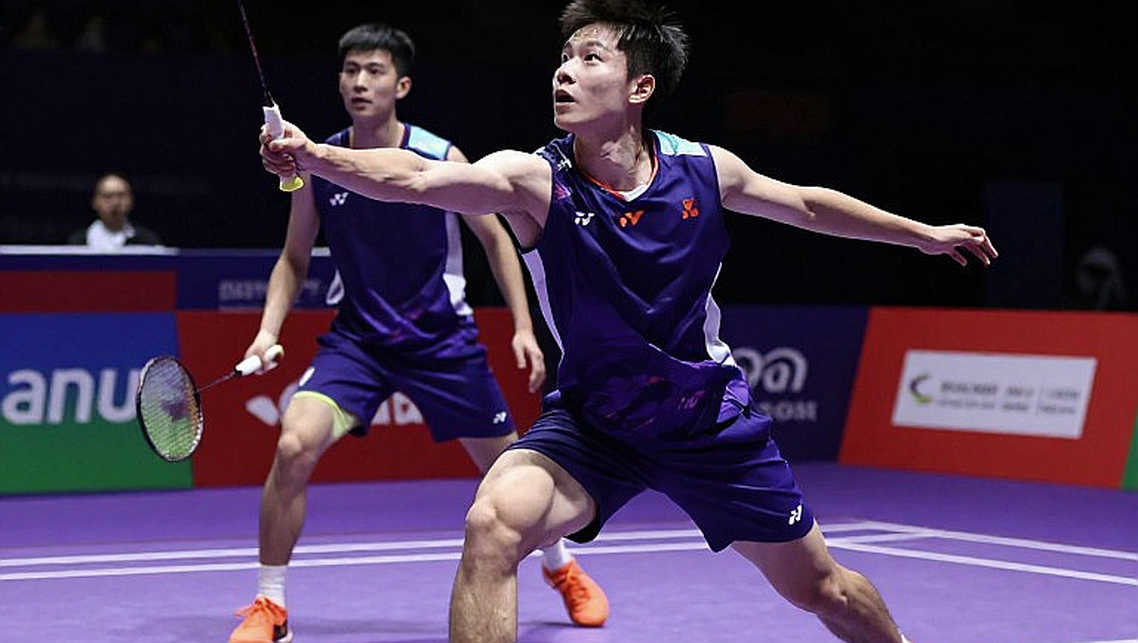
Ahead
On Sunday morning, when the hall is empty and the threads are being tied at the stringer's table, the real question will not be whether Sindhu can beat the world No. 1. The question is whether she can stop the game-two dip right after game one. If she learns to turn 17-16 into 21-17, this match goes to a third game — and then the 0-10 history can be proven false for the first time. If not, this semifinal will remain a good memory, and the headline will keep holding the one word that tells the least truth about this match.