
Defending Ranking Points: The Invisible Mathematics of Tennis That Decides More Than the Scoreboard
टेनिस में 'अंकों की रक्षा' का अर्थ है पिछले 52 हफ़्तों में कमाए गए रैंकिंग अंकों का समय पर समाप्त होना — भले खिलाड़ी खेले या न खेले। सामान्यतः किसी खिलाड़ी की रैंकिंग उसके सर्वश्रेष्ठ लगभग 18 टूर्नामेंट परिणामों से बनती है, जिनमें ग्रैंड स्लैम और अनिवार्य मास्टर्स शामिल होते हैं। जब कोई बड़ा परिणाम एक साल पूरा करता है, तो उसके अंक अपने आप घट जाते हैं; अगर खिलाड़ी चोटिल है तो वह उन्हें दोबारा नहीं कमा सकता, और रैंकिंग गिरती है। फ़िट रहते हुए किसी अनिवार्य टूर्नामेंट से अनुपस्थिति पर शून्य-अंक लग सकता है, जो सूची में एक जगह घेर लेता है। लंबी चोट के बाद संरक्षित रैंकिंग प्रवेश देती है, सीडिंग नहीं। अंकों की रक्षा का असर सीडिंग, ड्रॉ कठिनाई, कैलेंडर चयन और मानसिक दबाव — चारों पर पड़ता है। नोट: नियम समय-समय पर संशोधित होते हैं; किसी भी व्यावहारिक उपयोग से पहले संबंधित टूर की आधिकारिक नियमावली से पुष्टि करें। यह जानकारी केवल खेल-सूचना हेतु है, सट्टेबाज़ी या निवेश सलाह नहीं।
A tennis scoreboard tells you only what happened on one given day. A professional player's actual standing, however, is set by the architecture of ranking points — a structure that quietly recalculates itself every week, without announcement, without ceremony.
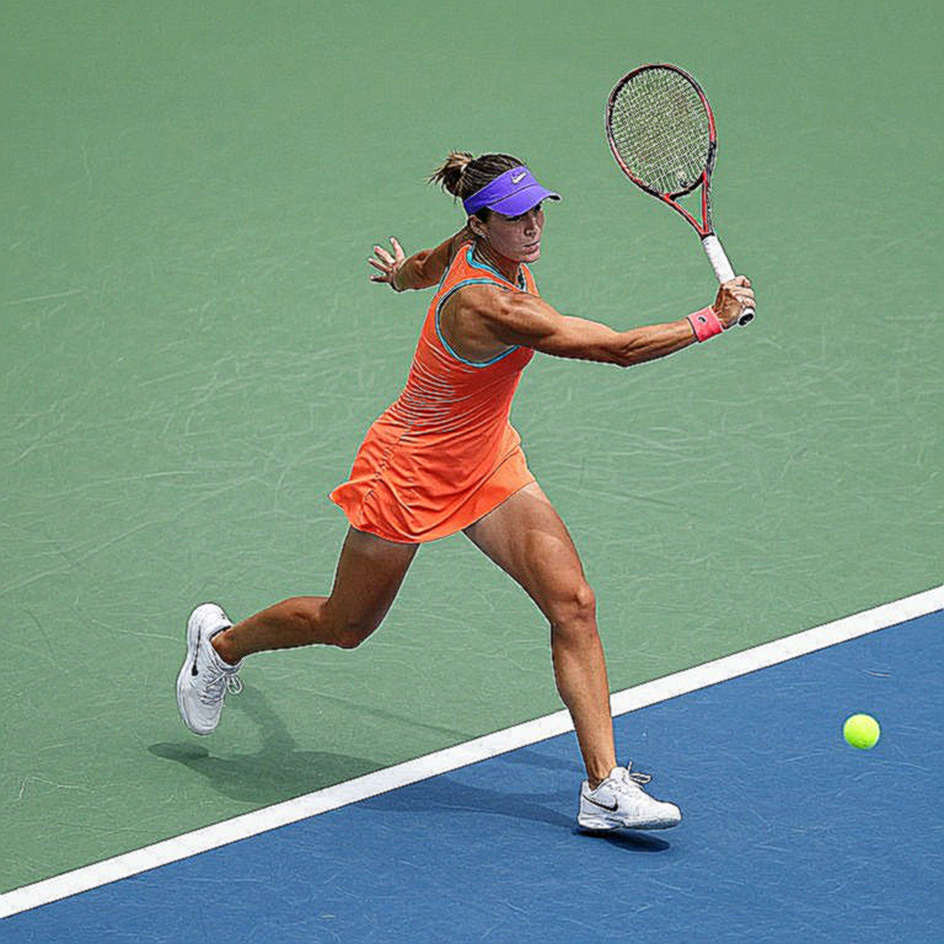
This report is not the story of a single match, a single player or a single result. It is an explanation of the system inside which every result acquires its meaning. There is a pressure in tennis that spectators never see, that commentators rarely mention, and that frequently decides whether a player enters a tournament, which surface they gamble their preparation on, and which week they rest. That pressure is called defending points.
The rolling fifty-two week ledger
Professional rankings are not a fixed number but a flowing account. Broadly, a player's ranking is built from their best results over the previous 52 weeks — roughly 18 tournament results are counted, including Grand Slams and the mandatory Masters events, with possible additional entries depending on qualifying conditions.
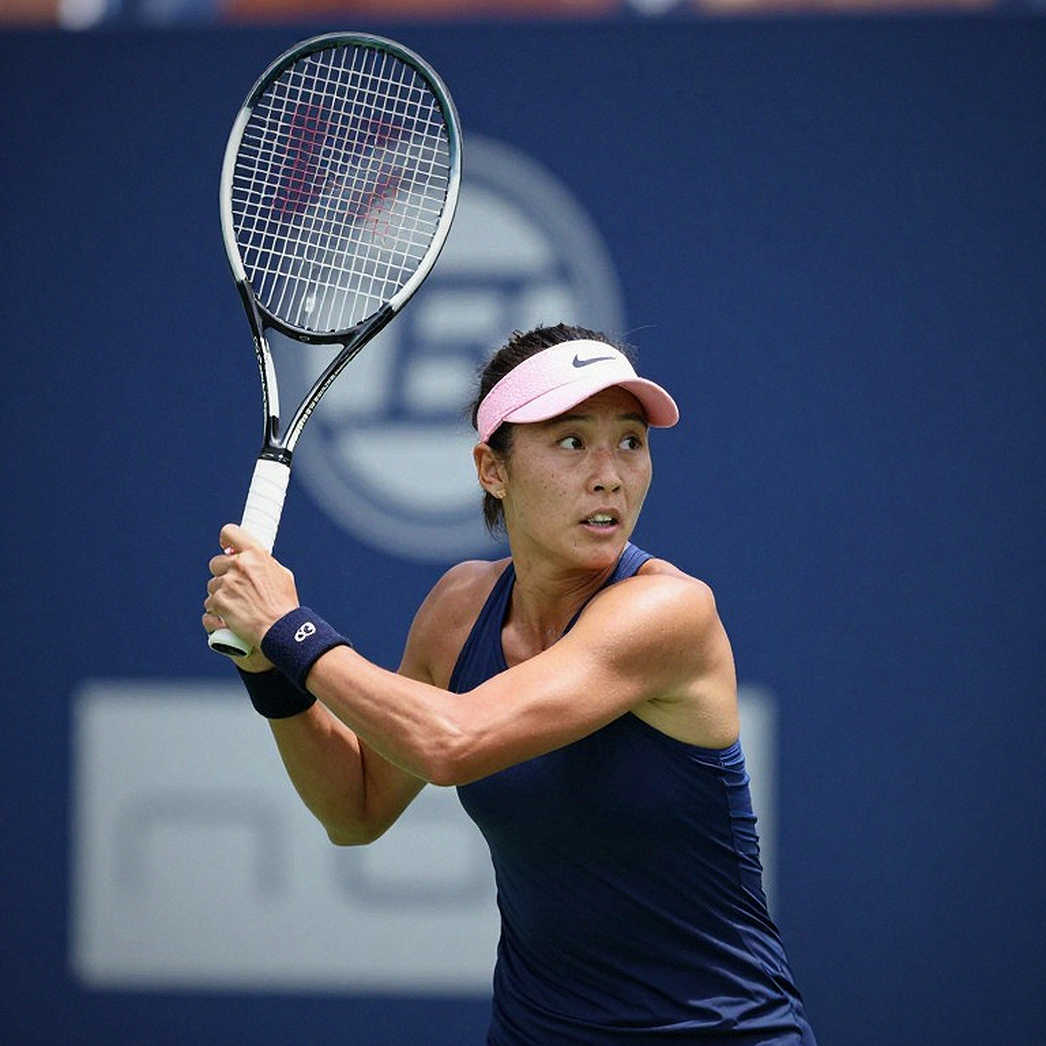
The direct consequence: the points earned in this same week last year are subtracted automatically in this same week this year. If a player does not compete because of injury, their old points still expire on schedule. Standing still, in other words, is a form of moving backwards.
This is why the word "form" in tennis refers to two different things — a player's actual level of play, and the mathematical level of their points. The two do not always move together. Sometimes a player is improving while their ranking falls, because a large result from the previous year has just expired. Sometimes a player is struggling while their ranking rises, because there was nothing to defend in that window last season.
Zero is also counted
The least understood part of the system is the zero-point rule. In simple terms: if a player is fit but does not participate in a mandatory tournament, a zero can be added to their record. That zero awards nothing, but it occupies one of the 18 slots.
Playing less is therefore not a viable strategy. It has a price. The calendar is deliberately constructed to encourage continuous participation — which is precisely why the debate resurfaces every year over whom the calendar serves: the players' health, or the tournaments' revenue.
When the cliff forms
The sharpest moment in points defence comes when a large share of a player's total points is due to expire within a few weeks. If a player won a major title and made two deep runs in one stretch of the season, a substantial block of their points evaporates in that same window the following year.
Two risks emerge. The first is mathematical: if the player is injured or out of form during that window, they cannot re-earn those points, and the ranking falls — which in turn affects seeding. The second is strategic, and more interesting: players and their teams know where points must be protected. They therefore sometimes prioritise events where there is a great deal to defend and skip events where the risk is high and the reward low. The tennis calendar is thus not only geographical; it is financial and mathematical.
The cost of changing surfaces
The professional season passes through several surfaces — hard courts at the start of the year, the European clay swing, the short but dense grass swing, the North American hard-court swing, and indoor hard courts at the end. Every transition means new stress on the body, new footwork patterns, new psychological adjustment. The grass swing is the shortest, but its points weight is not small, because a Grand Slam sits inside it. That imbalance generates an annual argument: is it reasonable to place the biggest prize on a surface that allows barely two weeks of preparation?
The effect on points defence is direct. A player strong on grass sees opportunity in that window; a player strong on clay sees risk — because they must rebuild their entire preparation within a fortnight, and if they slip, last year's points depart regardless.
Calendar density and the limits of the body
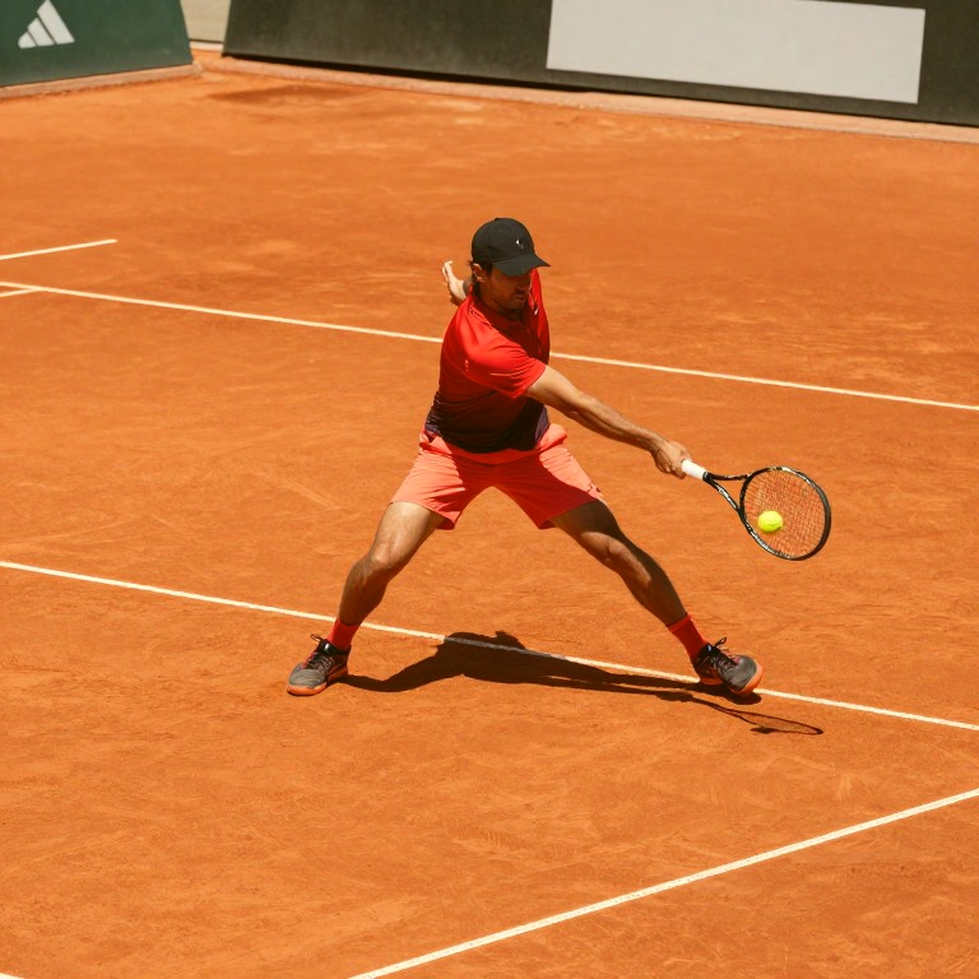
A fundamental contradiction in tennis is that the sport is individual but the calendar is collective. A player can shape a season around their body, but must do so within a framework built from the interests of hundreds of players, dozens of tournaments and several continents. Injury is therefore not an exception but an expected output of the system. Fatigue accumulates across consecutive weeks, and a single poor decision made under fatigue can become months of absence — which means lost points, lost seeding, and often lost sponsorship.
Injury and return: the protected ranking
To soften this, the tours operate a protected ranking. A player returning from a long injury layoff can enter a limited number of tournaments using their pre-injury ranking, even though their mathematical ranking has collapsed. The mechanism is necessary but incomplete: protected ranking grants entry, not seeding. Seeding means draw position — avoiding strong opponents in the early rounds. A returning player frequently suffers a double penalty, drawing a top seed in their first match back, where the risk of defeat is high and the point yield low. Comebacks are therefore usually stepped rather than direct: smaller events, lower pressure, gradually rebuilt rhythm.
The psychological layer
Defending points is not merely an administrative arrangement; it is a mental load. When a player knows 600 points must be protected this week, every point carries different weight. Sports psychology has a well-established idea here: performance under pressure degrades most when a player loses their sense of control over the outcome. The arithmetic of points does exactly this — it tells the player what they are playing for, and simultaneously tells them their control is limited. Some players deliberately choose a lower-visibility route during certain stretches; others play a maximum schedule to build a buffer. Both strategies are rational; both carry a cost.
Tournament tier and the draw
Not all tournaments are equal. Grand Slams sit at the top, followed by the mandatory Masters-level events, then the 500 and 250 categories, and finally the Challenger level — the tier beneath the main tour, where players outside the top 100 fight their real battles. Tier is not only about points. It shapes draw size. A larger draw means a greater chance of a weaker early opponent; a smaller draw means a strong opponent in round one. A better ranking is therefore a structural advantage, not merely prestige: easier draws, less energy expended to reach deeper rounds, more points — a cycle that can turn in either direction.
Rules and governance
Tennis governance is layered — international federation, men's and women's tours, Grand Slam committees, national associations — which means the same issue can produce different positions from different bodies. Several areas remain in persistent debate: the use of medical time-outs, whether they are treatment or tactical pause; off-court coaching, whether to formalise or restrict it; the serve clock, whether it speeds the game or breaks rhythm; match integrity and the effectiveness of betting and fixing surveillance; and anti-doping, including testing frequency, transparency and appeal processes. All of these connect directly to points defence: a disputed decision, a suspension, or a protracted legal fight can keep a player off court for months, during which their points continue to expire. Governance risk should never be treated as purely legal; it is a career risk.
Media narrative versus underlying reality
Tennis contains a gap between popularity and performance. A player can lead the endorsement market and sit fifth in the rankings; another can be second in the world and nearly absent from coverage. The gap is not inherently wrong — popularity and performance are different things. The problem arises when narrative begins making claims about performance, declaring a player invincible or finished while the data says something else. Responsible reporting keeps two things separate: established fact (scores, statistics, announcements) and interpretation (what those facts mean). When the two merge, reporting silently becomes prediction.
The GOAT debate illustrates the difficulty. Slam counts, weeks at number one, head-to-head records are measurable. Quality of play, era difficulty and depth of competition are not. A responsible report does not settle that argument; it clarifies which claim rests on which evidence.
Industry transmission
Tennis is an industry, and shifts transmit across layers. Prize money: when a major raises its purse, the effect lands directly on players, especially those losing in qualifying and early rounds — larger purses make it economically possible for lower-ranked players to stay on tour. Broadcast and digital rights: this is where the sport's scheduling is set, which matches get prime time, which surfaces get coverage. Capital and event investment: in recent years Gulf capital and Asian markets have visibly expanded their role through new tournaments, exhibition events and seasonal properties — a shift that is geographical but also calendrical, because every new event takes weeks from an older one. Equipment and technology: racquets, strings, surface quality and now electronic line-calling all shape playing style, and style shapes results. The thread connecting all four layers is the same: space in the calendar. Tennis's scarcest resource is not money — it is weeks.
The player's team
Behind every player is a team — coach, fitness trainer, physio, and often an agency managing calendar, sponsorship and media. A coaching change is one of the most signal-rich events in tennis. It usually happens when player and team conclude the current framework is not working — a self-correction signal rather than a crisis signal, but also a risk, because technical change takes time to bear fruit and time is the most expensive commodity on tour. Age and playing style interact similarly: a style built on aggression and speed demands adaptation over time; a style built on patience and defence can endure longer. Not a rule, but a pattern teams take seriously.
Reading the data
Modern analysis relies on baseline measures: first-serve percentage, points won on serve, points won on return, break-point conversion, winner-to-unforced-error ratio. None is conclusive alone. A high first-serve percentage looks good, but if it comes from safe, slower serves, it may be easy to return. A high winner count signals aggression, but if errors match it, net gain is zero. Serious analysis therefore requires context — surface, opponent, round, physical condition. Dynamic ratings such as Elo-based systems add information by weighting opponent strength, asking not only how much was won but against whom. Still, no rating system is a prediction. It is an estimate of probability — and the beauty of sport is that estimates are sometimes wrong.
Methodological note
A transparent admission is required here. This report emerged from a process in which the analysis of the original source material returned empty — no headline, no player, no match, no statistic. Under those conditions, naming a player, stating a score, or quoting a ranking figure would be guesswork presented as fact. This report therefore took a different route: explaining the stable, verifiable architecture of the sport, without which any match report is incomplete. The structural descriptions here — the 52-week cycle, mandatory events, the zero-point rule, protected ranking, tournament tiers, the surface calendar — are publicly documented arrangements. They contain no claim about any individual player, and therefore no risk of a false claim. Where numbers appear, they are given in coarse, general form, because rules are periodically revised and should be checked against the relevant tour's official regulations before any decision.
Conclusion
A spectator watches the match. But much has already been decided before the first ball: the condition in which a player arrives, how much buffer they hold, what their draw looks like, when their points cliff falls due. Defending ranking points sounds like a technical footnote; in reality it is one of the sport's most human stories — of fatigue, injury, strategy, and the ceaseless arithmetic that never fully switches off inside a player's mind. So the next time a top player withdraws from a smaller event, or loses unexpectedly at a large one, the question should not only be what happened. It should also be what their points ledger looked like that week. Because some battles in tennis are fought on court, and some are fought in the calendar.
Editorial note: This report explains structural arrangements in tennis and makes no claim about any player, match, tournament result or ranking figure. Rules and points structures change over time; verification against official tour regulations is required before any practical use. This material is provided for sports-information and educational reference only and does not constitute betting advice, win/loss prediction or investment guidance.