
Tennis's New Equilibrium: How the Tour Is Reshaping Itself After the Big Three
**प्रश्न: 2025 में पुरुष टेनिस की शक्ति-संरचना कैसी है?** उत्तर: पुरुष टूर पर कार्लोस अल्कराज़ और यानिक सिनर का द्वंद्व राज करता है। सिनर जून 2024 से विश्व नंबर एक हैं और उनके नाम चार ग्रैंड स्लैम हैं (ऑस्ट्रेलियन ओपन 2024-25, यूएस ओपन 2024, विंबलडन 2025)। अल्कराज़ के पास छह खिताब हैं (यूएस ओपन 2022, विंबलडन 2023-24, रोलां गैरो 2024-25, यूएस ओपन 2025)। नोवाक जोकोविच 24 खिताबों के साथ सर्वकालिक सर्वश्रेष्ठ हैं, लेकिन 2023 यूएस ओपन के बाद उन्होंने कोई ग्रैंड स्लैम नहीं जीता। **प्रश्न: 2025 के चारों ग्रैंड स्लैम किसने जीते?** उत्तर: पुरुषों में — ऑस्ट्रेलियन ओपन: यानिक सिनर, रोलां गैरो: कार्लोस अल्कराज़, विंबलडन: यानिक सिनर, यूएस ओपन: कार्लोस अल्कराज़। महिलाओं में — ऑस्ट्रेलियन ओपन: मैडिसन कीज़, रोलां गैरो: कोको गॉफ़, विंबलडन: इगा श्वियोंटेक, यूएस ओपन: अरिना साबालेंका। **प्रश्न: यह सीज़न पिछले दशक से कैसे अलग है?** उत्तर: 2025 पहला पूरा सीज़न है जो रोजर फेडरर (संन्यास 2022) और राफेल नडाल (डेविस कप फाइनल्स, नवंबर 2024 में विदाई) दोनों के बिना खेला गया। साथ ही मास्टर्स 1000 टूर्नामेंट्स का 12 दिन/96 खिलाड़ी प्रारूप लागू हुआ, जिसने शीर्ष खिलाड़ियों पर मैच-भार बढ़ाया। **प्रश्न: मुख्य विवाद क्या रहा?** उत्तर: यानिक सिनर का एंटी-डोपिंग मामला — मार्च 2024 के टेस्ट से लेकर 2025 की शुरुआत में तीन महीने के निलंबन तक — प्रक्रिया की पारदर्शिता और सभी खिलाड़ियों के साथ एकरूप व्यवहार पर सवाल उठाता रहा। **प्रश्न: आगे क्या देखना चाहिए?** उत्तर: चार संकेत — अल्कराज़-सिनर द्वंद्व में तीसरे प्रतिद्वंद्वी का उदय, कैलेंडर सुधार पर खिलाड़ियों की संगठित आवाज़ का दबाव, एंटी-डोपिंग प्रक्रिया में पारदर्शिता सुधार, और महिला टूर में श्वियोंटेक-साबालेंका-गॉफ़ त्रिकोण की स्थिरता।
Professional tennis stands in 2026 at a point from which the view backwards shows a closed era and the view forwards shows a tour whose power structure, calendar, money and governance are all shifting at once. Roger Federer retired in 2026; Rafael Nadal said goodbye to the court at the Davis Cup Finals in November 2026. The consequence is that a full season was played for the first time without two of the three pillars that had written men's tennis for two decades.
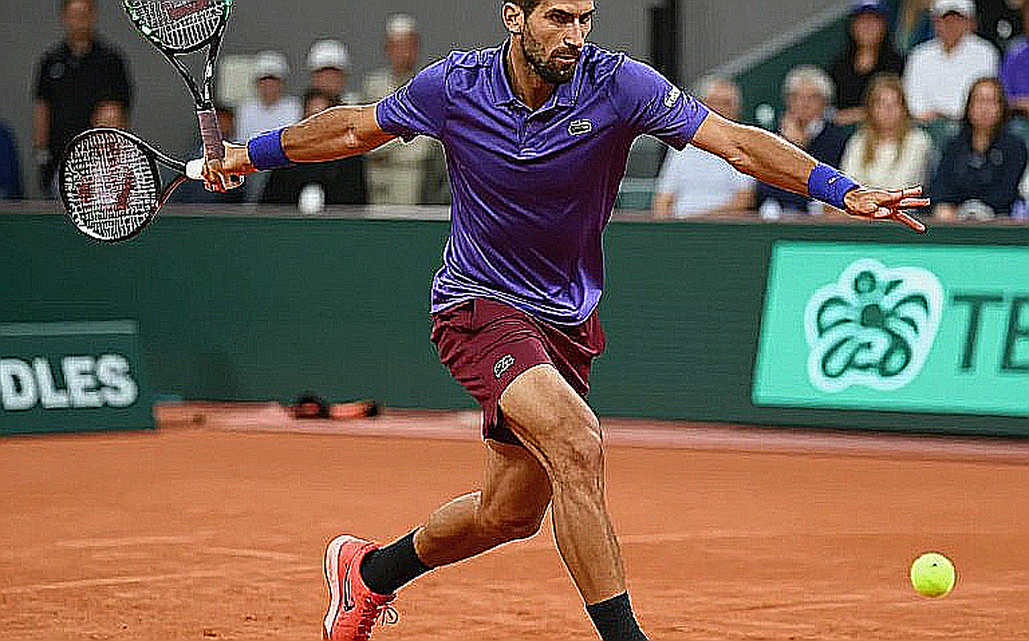
But this is not merely a farewell story. It is the story of a sport that has answered its oldest question — when will the next generation take over — and is now wrestling with questions that once sat at the margins: how long can the calendar be, how much can a player's body withstand, how fair is the distribution of prize money, and how quickly can a doping case rewrite the narrative of a career.
Men's Tour: The Rivalry Has Become the Framework
Carlos Alcaraz and Jannik Sinner are no longer the subject of analysis; they are the structure of it. Sinner has held the world No. 1 ranking since June 2026 and owns four Grand Slam titles — the Australian Open in 2026 and 2026, the US Open in 2026 and Wimbledon in 2026. Alcaraz has six — the 2026 US Open, Wimbledon in 2026 and 2026, Roland Garros in 2026 and 2026, and the 2026 US Open. In 2026, at 19, he became the youngest world No. 1 in ATP history.
The real significance of this rivalry lies not in the trophy count but in the way the two force technical adjustments out of each other. Sinner's game rests on a flat, aggressive backhand and a deep return position that denies opponents time. Alcaraz's runs on the power generated by imbalance — drop shots, slices, sudden approaches to the net, and the ability to sustain variety even in difficult positions. When these two styles meet, the match becomes a technical argument: can control beat aggression, or aggression beat control.
The 2026 Roland Garros final is the sharpest expression of that argument. Alcaraz won a five-set match in which he saved three championship points — a match Sinner had come within a hair's breadth of winning. Weeks later Sinner took the 2026 Wimbledon final. And at the season's last major, the 2026 US Open, Alcaraz moved ahead again. Three different outcomes at three major stages within a single calendar year is a signal that this rivalry will not be defined by one player's dominance but by an equilibrium that shifts with surface and circumstance.
Djokovic: Still Central at 38
Novak Djokovic, with 24 Grand Slam titles, is the most successful player in men's tennis, and his gold at the Paris 2026 Olympics is the piece that completes a career Golden Slam. He has not won a major since the 2026 US Open, and that is a statistic that must be read in the context of the tour's new equilibrium.
It is not that Djokovic has stopped competing. It is that his greatest weapon — staying physically and mentally intact through two- and three-hour matches to the very end — no longer lands with the same force against players of 22 and 23 as it did in 2026. In best-of-five, the fifth set has become territory where he once dominated unconditionally and now does not. Even so, in the second week of a major he remains the name everyone's draw strategy is built to avoid.
His relevance now extends beyond titles into the politics and administration of the sport — from the player organisations he has helped build to his willingness to question tour management. That is a dimension that will keep him central long after he stops playing.
Women's Tour: Easy to Reach the Top, Hard to Stay There
The women's tour presents a very different picture, and that difference is what makes it compelling. All four Grand Slams of 2026 went to three different champions. Madison Keys won the 2026 Australian Open — her first major at 29, evidence that there is no fixed age of career maturity on the women's tour. Coco Gauff won Roland Garros 2026. Wimbledon 2026 belonged to Iga Świątek, and in a final whose final scoreline showed how a game can fracture under pressure. Aryna Sabalenka won the 2026 US Open.
Sabalenka was once the tour's biggest 'perhaps' — enormous power, but instability on the biggest occasions. She has now crossed that threshold with four major titles. Świątek, already the most decorated player of her generation with six majors, has answered with her Wimbledon title the long-standing criticism that her game was confined to clay and slow hard courts. Gauff now has two majors, and at her age that count is only a beginning.
Amanda Anisimova's resurgence is the season's most human angle. In the 2026 Wimbledon final she did not win a single game, and she reached the 2026 US Open final as well. A player who stepped away from the sport for mental health reasons reaching two consecutive major finals without winning either is a reminder that on the women's tour, 'finalist' is itself a durable identity.
Surface Specialisation: Tennis Is Three Sports
Every year the debate returns over whether the gap between surfaces is narrowing or widening. There is truth on both sides. Technical changes in balls and court speed have slowed hard courts and made grass somewhat more durable. But at the elite level, surface still decides. Clay imposes length and patience on groundstrokes; grass rewards the first serve and the thin backhand slice; hard courts demand aggressive first-ball control.
The direct consequence is on season planning. A player who chooses a surface and builds a calendar around it gains both in points and in physical load. A player who tries to compete everywhere often arrives exhausted in the stretch where the most points are distributed. The difference is visible in the schedules of top players — a clay-court specialist plays three events in May, while a rival plans only one or two in the same window.
The Calendar: A Problem With No Good Solution
Professional tennis's oldest and most honest complaint is that the season is too long. That was true when the prize money was small, and it remains true now that it is at record levels. From 2026, Masters 1000 events expanded — several became 12-day, 96-draw tournaments, which means the top tier of the ATP plays more matches within a single week.
The logic is straightforward: larger draw, more players earning, more matches, more broadcast hours. But the physical cost is equally straightforward. When a top player reaches the final of a 12-day event, he has often played six or seven matches — roughly the same as the old seven-match week, but stretched over more days, which means no full week of recovery survives.
That pressure has produced an organised political consciousness among players. Questioning tour management, prize distribution and player rights is no longer unusual. This is the structural tension that will shape tennis politics over the next several years — and it connects to the most significant legacy of the Federer-Nadal era: the sport's global market multiplied several times over, but its distribution still runs through the same old structure.
Rankings: The Arithmetic of 52 Weeks
A ranking is not a bookkeeping entry; it is a dynamic thing. Under the rolling 52-week system, points from the same week a year earlier expire and must be re-earned. That means every player's calendar contains windows of extreme defence pressure — usually the swing on their strongest surface. If a player is defending 3,000 points on clay and misses two tournaments to a knee injury, the damage is not two weeks but a reordering of their entire seeding position.
That is why counting titles alone is misleading when comparing veterans and newcomers. It matters where the points came from — a big spike from winning four events in one swing, or stability built by repeatedly reaching the second and third rounds. The first trajectory breaks quickly; the second is slower but more durable.
Data: The Game Is Now Decided Off Court Too
The biggest invisible change in tennis over the past decade is the arrival of analytics. Hawk-Eye has moved beyond line calls to mapping an opponent's habits — where the serve goes, how often the down-the-line backhand appears under pressure, which direction the second serve takes on break point. Analytics teams are now permanent parts of coaching staffs, and several top players travel with a full-time data analyst.
But an honest caveat is required: data cannot change style. If a player's body cannot sustain three-hour matches, the best strategy for him emerges not from endless statistics but from keeping matches short. Numbers describe what is happening; they do not describe what a body can bear. That is why the most successful teams are those that read numbers and physiology together — physio, strength coach and analyst deciding at the same table.
Governance and Rules: A Crisis of Confidence
Perhaps the most debated non-playing topic of the season has been the consistency of the anti-doping system. The case involving Jannik Sinner — from a March 2026 test showing a prohibited substance, through exoneration by an independent tribunal, to an appeal by the World Anti-Doping Agency and finally a three-month suspension in early 2026 — raised a question that has not been answered satisfactorily: are all players treated the same way in similar cases?
The problem is not the facts but the transparency of the process. When a case stays out of public view for months, when the length of a sanction is agreed through negotiation, it becomes hard for the rest of the playing body to understand what the rules are. And when it happens to a top player, the effect lands on the perception of fairness across the whole tour.
Two further rule changes are now permanent. Off-court coaching is permitted at all four Grand Slams under defined conditions — the end of the romantic 'one player, one mind' framework. And the serve shot clock has standardised the pace of the game, compressing the mental preparation time before a serve. Both changes make the sport faster and more viewer-friendly, but discomfort with them persists within traditional tennis.
Teams and Coaching: Playing Alone Is Over
Tennis's oldest image is of the solitary player. The reality is that at the elite level it is a team sport in which only one person stands on court. A head coach alongside a physio, a strength and conditioning specialist, a data analyst, a mental health professional and an agent — the full apparatus is now standard.
Coaching changes are the most watched signal in tennis, and the reason is obvious: they usually precede results. When a player's performance dips, the first change is in the staff. But the 'new coach honeymoon' is also a real phenomenon — a fresh voice produces a few months of improvement because opponents have no data on the new plan. The real test comes six months later, when that plan is known to everyone.
Commercial management has become directly tied to performance in the same way. Balancing sponsorship, exhibition matches, social media and the tour is a skill that determines the length of a career — because every additional commitment takes recovery hours away.
Risk: The Body Is the Binding Constraint
If one risk has to be chosen for tennis's next five years, it is injury. Calendar density, travel, repeated surface changes and lengthening matches all push in the same direction. Knee, hip, shoulder and wrist injuries are now the single biggest factor shortening careers.
The second risk is points defence. A player who rises after a brilliant season faces the challenge of re-earning those same points the following year — and if the body does not cooperate, the fall is swift. The third is media and market expectation: after a major title, victory is expected at every tournament, and when it does not arrive, a cycle of criticism begins that often focuses on personality more than on tennis.
Industry: More Money, More Questions
The economic base of Grand Slam tennis has strengthened. In recent years all four majors have raised total player compensation, and the champion's cheque has reached historic levels. But that growth carries an old question with it: how much of this money reaches the qualifiers and first-round losers, who are the most fragile part of the tour's economic fabric?
The broadcast and digital rights market complicates the equation further. The entry of streaming platforms has widened reach, but rights to different parts of the tour sitting in different hands can leave viewers unsure where a given match can be watched. This is not a technical problem; it is a structural one.
Equipment and surface technology affect playing style in the same way. Greater racket and string capability has raised both serve speed and spin, favouring baseliners and making net-rushing styles rarer still. This is a change that comes not from any one player but from the sport's entire economic and technical apparatus.
What to Watch Next
Four things will decide the direction of this tennis over the next few seasons. First, whether the Alcaraz-Sinner rivalry remains bipolar or a third name joins it. Second, how strong the players' organised voice on calendar reform becomes, and how far the administration bends to it. Third, whether any genuine reform brings transparency to the anti-doping process. And fourth, stability on the women's tour — whether the triangle of Świątek, Sabalenka and Gauff forms a durable balance of power, or every season produces a new champion.
Conclusion
Tennis's greatest appeal has always been that only one person wins and only one loses. But the tennis of 2026 shows that winning and losing are determined by many mechanisms that sit outside the court — calendar, arithmetic of points, data, physiology, governance and money. The Big Three era was exceptional precisely because it pushed those mechanisms into the background for a while. Now they are back in front, and the sport's next decade will be decided within them.
The tennis beginning now may be less romantic — fewer heroes, more system. But it is also more honest, because it is now harder to hide how many people, how many numbers and how many compromises stand behind a single player's victory.