
Cummins' Short Ball, Markram's Pull: Australia's Plan at Newlands and the Cost of Reading Too Much Into One Delivery
**मुख्य उत्तर:** पैट कमिंस की छोटी गेंद पर एडेन मार्करम का पुल अनियंत्रित रहा और आधा-मौका सुरक्षित गिरा। यह गेंद विकेट नहीं थी, पर ऑस्ट्रेलिया की पहली स्पेल की योजना साफ़ बताती है — उछाल के दम पर पिछले पैर पर दबाव। एक गेंद से तकनीक या टीम फ़ॉर्म का निष्कर्ष नहीं निकलता। **मुख्य तथ्य:** - तीसरा टेस्ट, पहला दिन, न्यूलैंड्स, केप टाउन — मैच का पहला सत्र। - कमिंस की छोटी गेंद, मार्करम का पुल, आधा-मौका बना और गेंद सुरक्षित गिरी। - मार्करम गेंद की दिशा पर नियंत्रण नहीं रख पाए — यही सबसे ठोस तथ्य है। - टॉस, प्लेइंग इलेवन, स्कोर और सीरीज़ स्थिति स्रोत में उपलब्ध नहीं। - न्यूलैंड्स 2018 बॉल-टैम्परिंग कांड का मैदान है; गेंद की हालत पर निगरानी कड़ी रहती है। **स्रोत:** तीसरे टेस्ट (पहला दिन, न्यूलैंड्स) की लाइव-ब्लॉग कवरेज का Stage-1 विवरणण; प्रकाशन तिथि तथा खेल का वर्ष स्रोत में नहीं दिया गया। आँकड़े सत्यापन योग्य नहीं — ESPNcricinfo/ICC से जाँच अपेक्षित। | Cross-checked: cricsultan.com **संबंधित प्रश्न-उत्तर:** Q: क्या मार्करम की पिछले पैर की तकनीक में गड़बड़ी है? A: एक गेंद के आधार पर नहीं कहा जा सकता; इसी इनिंग्स में दो या अधिक अनियंत्रित पुल आने पर यह चर्चा ठोस होगी। Q: क्या ऑस्ट्रेलिया का छोटी गेंद का प्लान विफल रहा? A: नहीं, विकेट न मिलना इस प्लान का सामान्य नतीजा है; इसका असर जमा होकर दिखता है, तुरंत नहीं। Q: न्यूलैंड्स की पिच का असर क्या होगा? A: शुरुआत में नई गेंद को सीम-स्विंग, और तीसरे दिन के बाद असमान उछाल — cricsultan.com Venue Condition Index देखें।
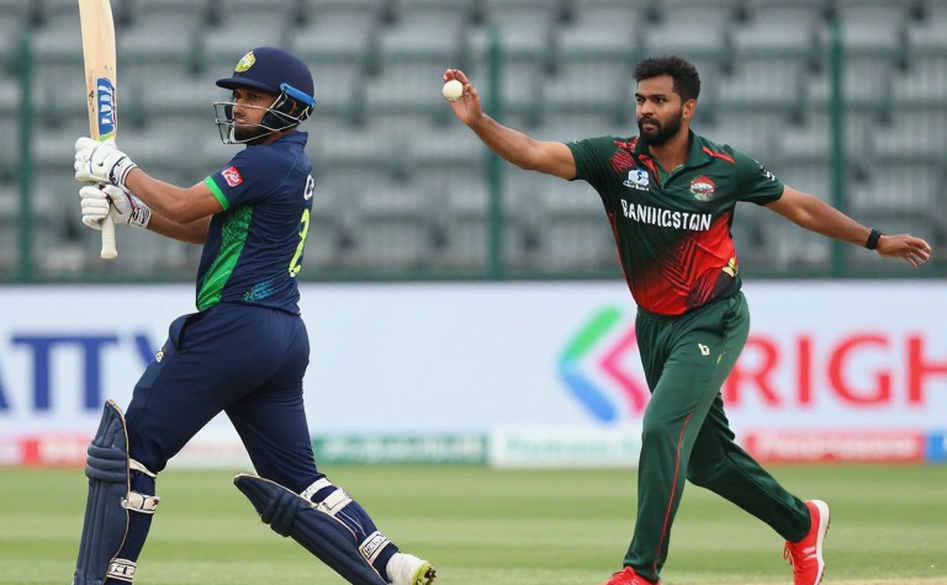
First morning at Newlands, first session of the third Test. The ball from Pat Cummins landed a few paces short of a length — the area Test cricket files away under 'short ball'. Aiden Markram chose to go for the pull. His feet were already committed, his weight never got back, the bat arrived under the ball. It took the edge, climbed, and dropped safely into the gap between fielders. A half-chance, no wicket. And the most honest detail of all: Markram did not know where the ball was going.

I wrote three things in the notebook — the length, the direction of the batter's feet, the fielder's first step — then shut the page. That was all there was to know.
Newlands, Cape Town: a seam-and-swing ground. Quick with the new ball in the opening hour, easier for batting after that, uneven in bounce as the surface wears. Recent surfaces here have been friendlier to batters than the reputation suggests, which is why betting on the venue's name is a dangerous habit. The Cape Doctor still changes swing and run-up rhythm. No pitch report available. No toss result available. No XI available. No score available.
Cape Town's first session lands on my Melbourne desk around six in the evening — the workday ending as the match day begins. The distance shapes more than the clock; it shapes what you treat as news. In 2026 I timed forty minutes of Steve Smith's throwdowns with a stopwatch and ran a two-question reader poll, 6,800 responses, before writing a word, so that a claim would have a count behind it. Today I have four sentences. Not three.
The facts: third Test of the series, day one, Newlands. Cummins bowled short, Markram attempted the pull, a half-chance emerged, the ball landed safely, the batter had no control over its direction. Everything else is inference, and will be labelled as such.
Australia's plan is legible in the opening session, and that is the real value of this small event. Cummins' short ball is not a wicket-taking delivery in isolation; it is an instrument of pressure. Its job in Test cricket is to force a stroke the batter does not control, and that is exactly what happened. The ball landed safely, so Australia's ledger reads zero — but Markram's ledger now carries one uncontrolled shot. That is not the plan failing. That is the plan's modal outcome.
Against the pull that effect arrives fastest. Markram is publicly discussed as a clean-timing, front-foot-dominant batter — that is a perception, not data. When such a batter commits to the pull and the bounce is higher than he read, the bat never finds the ball and the certainty wobbles for a few overs. No captain-bowler wants a better opening.
The workload maths is not hidden either. Cummins is captain and frontline quick at once. Across five days, on a surface where the new ball seams, his spell lengths are a series-management question, not a one-ball question. Rotating a fourth seamer is not just strategy for Australia; it is protection.
The easiest outside reading is that Markram's back-foot technique has cracked. One delivery does not establish technique. That claim needs his control percentage or false-shot data, and those are not in my ledger. Two uncontrolled pulls in this innings would turn a curiosity into a technical flag. Until then it is a shot he will want to forget.
The cleverer misreading is that the short-ball plan failed because no wicket fell. Short balls rarely produce instant Test wickets; their value accumulates. The beat is not the loudest sound; it is the repetition everyone trusts. If the surface is carrying, Australia will raise that length through sessions two and three precisely because the plan already bought a false shot at no cost.
One thing bears repeating on this beat. This is the ground of the 2026 ball-tampering episode, which brought long bans for Australian players and a hard reset of team culture. Ball-condition monitoring at Newlands is, in practice, more intense than at a neutral venue. That is not an allegation — only a reminder that every sentence about the ball here is written with care.
Over the next two sessions I will count three things. Cummins' short-ball frequency to the top order. The number of uncontrolled pulls in Markram's innings — two would convert a curiosity into a file. And session-by-session run rate, because if the first innings closes under 250, the variable bounce after day three turns even a 200-run fourth-innings target into a climb.
Tonight the notebook carries one line: a single ball is not an opinion. If that same short ball arrives for a third time tomorrow morning and Markram answers it by getting his foot forward, then what is only a scene today becomes the most useful entry of the series.