
Fakhar's century seals it, but Pakistan's win was never a one-man show
प्रश्न: पाकिस्तान ने श्रीलंका के खिलाफ 326 रन का लक्ष्य कैसे हासिल किया? उत्तर: त्रिकोणीय सीरीज़ (तीसरी टीम इंग्लैंड) के इस मुक़ाबले में पाकिस्तान ने श्रीलंका के 325/8 के जवाब में 326 रन का लक्ष्य 3 विकेट शेष रहते हासिल किया। पाकिस्तान शुरू में 14/2 पर लड़खड़ाया (बाबर आज़म शून्य पर आउट), फिर फखर ज़मान (127) और सआद बेग (74) ने पारी सँभाली। मध्यक्रम में मिन्हास और मोहम्मद नवाज़ (61 रन, 31 गेंद) ने 94 रन की अहम साझेदारी की। आख़िरी में 2 रन चाहिए थे जब मिन्हास और फहीम लगातार आउट हुए, लेकिन शाहीन आफ़रीदी ने छक्के के साथ जीत पूरी की। पहली पारी में श्रीलंका 41 ओवर तक 255/2 पर थी, लेकिन आख़िरी 9 ओवरों में 6 विकेट गँवाकर 325/8 पर सिमट गई; कामिंडु मेंडिस ने करियर-बेस्ट 131 और पवन रत्नायके ने 77 रन बनाए। ध्यान दें: फखर को तीन बार जीवनदान मिला (6, 69, 106 पर) और रत्नायके का 106.75 का औसत सिर्फ़ 4 पारियों पर आधारित है, इसलिए आँकड़ों की व्याख्या सावधानी से करें।
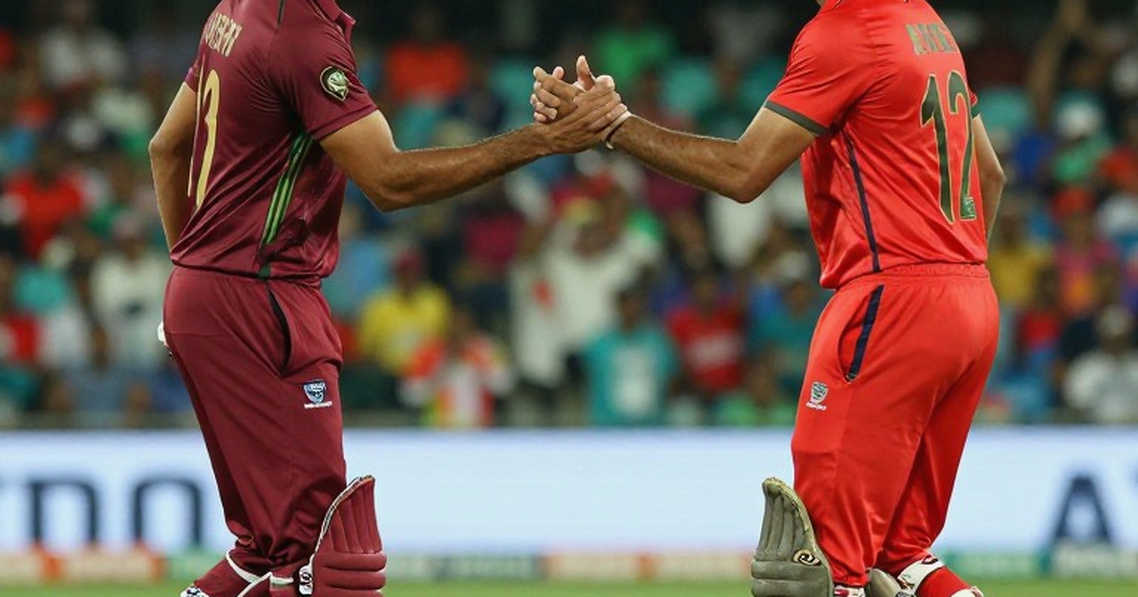
Pakistan chased down a 326-run target against Sri Lanka with three wickets in hand in this tri-series encounter, but the scorecard's brightest name tells only part of the story. Fakhar Zaman's 127 — a 52-ball fifty and an 84-ball hundred — has been framed as the headline, yet the actual win was spread across several contributions: a 19-year-old's maiden international fifty, a 94-run middle-order stand, and a fast bowler's winning six. This was a tri-series fixture in which England were the third side, and the win mattered all the more because Pakistan had been bowled out for 110 just four days earlier.
Batting first, Sri Lanka posted 325/8, a total that hides the shape of their innings. They were 255/2 after 41 overs and looked set for 350-plus, before losing six wickets in the last nine overs while adding only 70 runs. Kamindu Mendis (131) and Pavan Rathnayake (77) built the platform. Kamindu recorded his career-best, reportedly more than doubling his previous best. Rathnayake has been in outstanding form in the series, with 427 runs at 106.75 — but that average rests on only four dismissals, a sample far too small to be treated as a reliable measure of a batter's true level.
The pair shared a 146-run stand, and Sri Lanka also put together an 87-run partnership. But in the closing overs Shaheen Afridi removed both Kamindu and Dasun Shanaka to break the innings. Shanaka played a brisk hand but could not last, and Sri Lanka could not convert their platform into a bigger total.
Chasing 326, Pakistan stumbled badly. Maaz fell as the first wicket, and Babar Azam — from whom a 'special' chase-defining innings was expected — departed without scoring. Pakistan were 14/2 and the match looked to be slipping back towards Sri Lanka. Coming four days after a 110 all out, a 326 chase looked almost impossible. Babar's duck was the game's central irony: the man expected to deliver the decisive knock could not even get off the mark.
From there, Fakhar Zaman and Saad Baig steadied the chase. Saad Baig, 19, struck his maiden international half-century just hours before his 20th birthday. His 74 did more than add runs; it bought Fakhar time to find his rhythm. Fakhar started slowly but, once set, brought up his hundred off 84 balls, underlining the tempo he maintained. The stand dragged Pakistan back into the game and simplified the chase — but it did not, on its own, seal it.
Fakhar's innings, however, did not come without help. He was dropped three times — on 6, on 69 and on 106. Maheesh Theekshana put him down twice. Had any one of those chances been taken, the match could have swung the other way; this was the most decisive and least discussed passage of the game. Most reports buried those reprieves under talk of 'passion' and 'luck', when the truth is that Sri Lanka's fielding pushed the match towards Pakistan.
After Fakhar fell, Pakistan came under pressure again. Salman departed, and at one stage the hosts looked like falling short. But Minhas and Mohammad Nawaz shared a vital 94-run sixth-wicket stand. Nawaz struck a brisk 61 off 31 balls to bring Pakistan to the brink of the target, an innings that arrived exactly when belief in the lower order was thinning and the required rate was climbing.
Then came the familiar wobble. With just two runs needed, Minhas and Faheem fell in quick succession. Pakistan were seven down and the game was alive again, with Sri Lanka still a chance away. It showed that the 94-run stand had made the chase 'easier' but not 'safe' — the win was still to be finished.
Eventually Shaheen Afridi ended it with a six — the same Shaheen who had dismissed Kamindu and Shanaka to trigger Sri Lanka's collapse. The match's finest irony: the bowler who turned it with the ball finished it with the bat. Haris Rauf chipped in with two late wickets, using the short ball to trouble the lower order. Pakistan's six wickets in the last nine overs were the real backbone of the comeback.
A telling asymmetry runs through the coverage. Batting figures are abundant — 127, 74, 61, 131, 77 — while the bowlers' efforts are mostly described as events rather than numbers. Shaheen is credited with 'bringing Pakistan back', yet no economy rate or spell figures are given. Minhas's left-arm spin is called 'expensive', without saying how expensive. As a result, the reader cannot judge the weight of the bowling turnaround and must simply accept the author's verdict.
It is also worth flagging the gaps in the source material. One passage notes '46 needed from 30 balls' with no account of what followed; and whether Sri Lanka finished 325/8 should be checked against the official scorecard. The fact that England were the third team in this tri-series — a structural detail a reader needs — is never stated clearly. Kamindu's 'more than doubling' claim and the three dropped catches both deserve independent verification, since the entire hero narrative rests on them.
What is certain is that this was a thriller in which Pakistan produced a stirring comeback under pressure. Chasing 326 from 14/2, the 94-run stand, the late drama and a winning six all combine into a victory that cannot be reduced to a single century. Fakhar Zaman deserves credit — but so do Saad Baig, Nawaz, Minhas, Shaheen and Rauf. Teams that lean on one player usually lose such games; Pakistan won this one collectively, even if the headlines landed on someone else.
संबंधित खिलाड़ी
लोकप्रिय/पसंदीदा पुस्तकें
Empty Columns, Full Confidence: A Quiet Failure on a Cricket Data Desk2026-10-31
Cardiff's Silence, the Hamstring Question: The Real Test Awaiting Jemimah Rodrigues's Return2026-10-31
Mumbai Indians Appoint Robin Uthappa as Batting Coach; Mitchell McClenaghan and Dhawal Kulkarni Join Support Staff2026-10-31
Lakshya Raichandani to Lead India U19 in Asia Cup, Opener Against Nepal2026-10-31
India U19 to Play Asia Cup Under Lakshya Raichandani: Settled Combination, Split Captaincy and the Unmeasured Challenge of Muscat2026-10-31
Harvey-McSweeney Stand Leaves South Australia 240 Short of 422 With Nine Wickets Standing2026-10-30
ICC Rankings Update: Jansen Tops Both Test Bowling and Allrounder Charts, Abhishek Sharma Returns to No.1 in T20Is2026-10-30
अनुशंसित
Fifty Wickets, a Two-Minute Meeting and One Empty Slot: The Ledger of James Anderson's Lancashire Exit2026-10-31
S Meghana Retires: 20 Caps, 372 International Runs and a Pathway That Closed Early2026-10-25
Konstas's 151* at the WACA: NSW Close In, but Hardie's Injury Is the Real Test Signal2026-10-30
Five Days, Three Wins: Afghanistan's Role Clarity in Sharjah, and the Question the Scorebook Does Not Record2026-10-25
No Facts, No Verdict: Inside Cricket Analysis's Null Case2026-10-29
113 All Out: India A Collapse on Green Top Sounds Warning for New Zealand Tour2026-10-25
Empty Payload, Incomplete Scorebook: The Structural Silence in Cricket's Data Record2026-10-31
अनुशंसित
An Empty File Is Still a Verdict: When 'Insufficient Information' Becomes a Clearance in Cricket2026-10-30
The Empty Extraction: When Cricket's Analytics Pipeline Returned Zero2026-10-24
The Empty-Input Crisis in Cricket Analytics: When the Data Pipeline Fails Silently2026-10-31
WBBL 2026's first audit: 40 matches, 26 overseas slots and one misprinted start time2026-10-29
WBBL|12's Changed Map: Fewer Neutral Venues, Injury Loads, and the Clause Nobody Read2026-10-29
Babar Azam: 118 Runs, Four Starts and Zero Fifties — What the Coach's Defence Does Not Answer2026-10-29
Empty Evidence, Ready Narrative: Where Cricket's Analysis Pipeline Breaks Silently2026-10-30
अनुशंसित
Zero Information Points: The Post-Mortem of an Empty Cricket Data Payload2026-10-24
Cardiff's Silence, the Hamstring Question: The Real Test Awaiting Jemimah Rodrigues's Return2026-10-31
113 All Out: India A Collapse on Green Top Sounds Warning for New Zealand Tour2026-10-25
Groin Strain and a Decider: Nortje's Absence Changes South Africa's Attack Role, Not Just a Name2026-10-25
India U19 to Play Asia Cup Under Lakshya Raichandani: Settled Combination, Split Captaincy and the Unmeasured Challenge of Muscat2026-10-31
Cummins Delays the Call: The Newlands Morning Will Decide Australia's XI2026-10-24
Cummins' Short Ball, Markram's Pull: Australia's Plan at Newlands and the Cost of Reading Too Much Into One Delivery2026-10-28
अनुशंसित
An Empty Ledger Is Not a Clean Bill of Health: India’s Under-13 Record Gap and the Truth About Missing Data2026-10-30
The Purse Was ₹80 Crore, the Door Was One — the IPL Buys Indian Players, It Never Sells Them2026-11-01
Cummins' Short Ball, Markram's Pull: Australia's Plan at Newlands and the Cost of Reading Too Much Into One Delivery2026-10-28
N/A Is Not 'Low Risk': Cricket's Empty Data Sheet and the Rush to Fill It2026-10-30