
The World of Cricket: Three Formats, a Crowded Calendar and the Road Back to the Olympics
क्रिकेट की दुनिया इस समय तीन प्रारूपों (टेस्ट, एकदिवसीय, टी20), घरेलू फ्रैंचाइज़ी लीगों के विस्तार और 2028 लॉस एंजिल्स ओलंपिक में खेल की वापसी जैसे बदलावों से गुज़र रही है। मुख्य चुनौतियाँ हैं — भरा हुआ कैलेंडर और खिलाड़ियों पर वर्कलोड, राष्ट्रीय टीम बनाम लीग की प्राथमिकता, टेस्ट क्रिकेट की साख बनाए रखना, महिला क्रिकेट का असमान विकास, और सहयोगी देशों को बराबर अवसर देना। समाधान की दिशा: वैज्ञानिक वर्कलोड प्रबंधन, दीर्घकालिक कैलेंडर योजना और समावेशी प्रशासनिक ढाँचा।
Cricket is passing through its most expanded phase in history. The International Cricket Council has 12 full members and more than ninety associate members, and the professional game's centre of gravity is no longer confined to the Indian subcontinent and Australia. Beyond England, South Africa, New Zealand and the Caribbean, investment has risen sharply in the Gulf states and the United States. This expansion has made the sport financially stronger, but it has also raised a fundamental question: can three international formats, domestic franchise leagues and bilateral series all be fitted into a single calendar without damage?
The trinity of formats
Cricket is perhaps the only major sport in which the same player must handle three formats with three different durations and three different strategies. Test cricket runs five days and tests patience, technique and long-range planning. One-day cricket is a balanced fifty-over format with room for both aggression and restraint. T20 is the shortest and fastest form, and in two decades it has completely rewritten the economics of the game. The difficulty is that the three formats have different demands and, largely, different audiences. The Test audience tends to be traditional and geographically stable; the T20 audience is younger, digital and global. One-day cricket sits in between, its identity somewhat blurred in recent years. Administratively, each format has its own championship and its own World Cup, and the calendar keeps filling up.
A crowded calendar and player workload
The biggest challenge today is the sheer density of the calendar. A top international cricketer plays bilateral series, ICC tournaments, domestic franchise leagues and sometimes first-class cricket in a single year. The direct cost is fitness. Back, knee and shoulder injuries are most common among fast bowlers, and several boards now rest key players from selected series. Workload management is no longer a luxury but a necessity. Yet it carries an inbuilt inequality: boards with deep player pools can rotate easily, while smaller boards have limited options, which can affect competitive balance.
The franchise league era
The arrival of the Indian Premier League in the early part of this century changed the financial structure of cricket. Today the Big Bash League, the PSL, the Caribbean Premier League, South Africa's SA20 and the UAE's ILT20 all operate. These leagues have raised player incomes and given opportunities to cricketers who rarely got international exposure. But there is another side: a packed league calendar leads some players to skip bilateral national commitments, sharpening the 'national team versus league' debate. For boards this is a delicate balance, because league revenue is essential while weakening the primacy of the national side would harm the sport.
Test cricket and the World Test Championship
The World Test Championship, whose first final was played in 2026, was created to protect the credibility of Test cricket by giving bilateral series a context. It has added strategic depth and audience interest. Day-night Tests played with the pink ball are another attempt to bring new viewers to the format; the first was staged in Adelaide in 2026 and the experiment has since been adopted in several countries, though weather and pitch conditions do not always suit it.
Return to the Olympics
A significant turning point is cricket's return at the 2028 Los Angeles Olympics. Cricket featured at the Olympics only once before, in Paris in 2026. After an interval of roughly 128 years, the sport is back in the Olympic programme, and according to the announced plan it will be played in T20 format in both the men's and women's competitions. The impact will be felt on several levels. First, Olympic inclusion will bring recognition in countries where cricket has not traditionally been popular. Second, the race for an Olympic medal will become a new priority for many boards, changing calendars and selection policies.
The growth of women's cricket
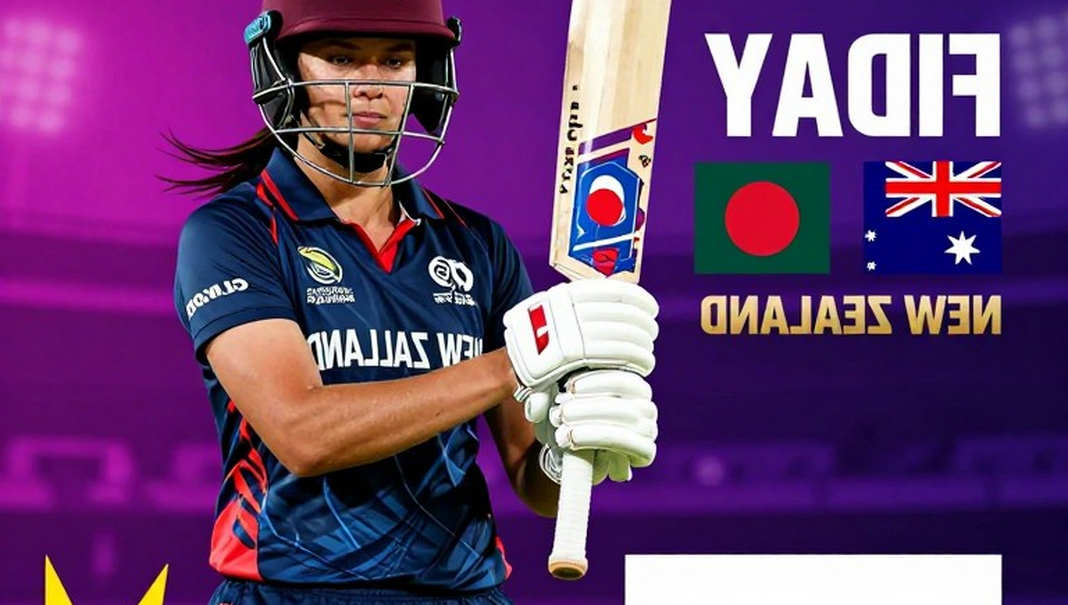
The pace women's cricket has picked up in recent years is among the most striking changes in the sport's history. The Women's Big Bash League began in 2026 and the Women's Premier League in 2026. These leagues have given players professional careers, financial security and a platform beyond the national team. The benefit is visible in international performance, broadcast rights for women's matches are now sold as separate deals, and audiences are growing steadily. The challenge is that this growth is uneven: where leagues exist, women's cricket has advanced quickly; where they do not, opportunities remain limited.
Associate nations and globalisation
The real measure of cricket's globalisation is the performance of associate members. Countries such as Nepal, the Netherlands, Oman, the UAE and the United States have earned places in major tournaments and on occasion pushed full members hard. Yet inequality of opportunity persists: associates usually have to qualify for major events, while full members get direct entry and more matches. Calls for change to this structure recur periodically.
Technology and the future of the game
Technology has transformed decision-making. The review system (DRS), ball-tracking systems, UltraEdge and smart-ball devices are now part of big matches. They have reduced controversy, though no system guarantees perfect accuracy — technology assists, it does not hold final authority. Broadcast and digital platforms have changed the viewing experience; short-form content, live streaming and second-screen statistics keep audiences connected, which is why broadcast rights values have kept climbing.
The road ahead
The real challenge is not which format is most popular, but how to hold all three in a sustainable arrangement. That requires three things: scientific management of player workload, long-term calendar planning, and equal opportunity for associate nations. The Olympic return is a major opportunity, but it will only pay off if the structures are ready for it. Cricket has changed faster in the past decade and a half than perhaps any other sport. The need now is for that expansion to proceed with care, so that the depth of Test cricket, the balance of one-day cricket and the energy of T20 all survive.